Accountability, Clinical Governance, Community Care, Ethics, health, healthcare, Law, medicines, nhs, paediatrics, prescribing, whistleblowing

‘I don’t want to hear anything bad’ – whistleblowing in health & social care.

Exposing the reality behind the spin

Summary

I am a retired healthcare professional, a nurse prescriber with experience in senior management in both the NHS and private sectors. I worked as a clinician with vulnerable adults on the margins of society.

Over the past two decades I’ve become involved with a situation I was previously unaware of. The widespread marginalisation and victimisation of health and care staff who raise concerns about patient safety and lose their careers as a result. I’ve learned that this problem is part of a much bigger picture which affects all of society, all industries and public sectors, in all countries of the world.

In this blog I reflect on the situation in England based on my experiences and those of the many people I have met as a result. All of whom experienced the backlash that can happen when organisational reputation trumps patient safety. One thing many of us have in common is that, put simply, we never intended to become known as ‘whistleblowers’, we were just trying to do our job to the best of our ability.

In conclusion, I look at key areas to be worked on in order to protect the public and really ‘learn lessons’. These cross all sectors and areas of work. They include the need for changes in legislation, an end to self-regulation in healthcare and elsewhere, and recognition of the value to society of those who risk everything to fight for justice and truth.

A dawning realisation

I began to realise something was seriously wrong when I returned to clinical work in 2002. Having previously worked in senior management (as Head of I.T. in an NHS Trust) and management consultancy, I became concerned that my employer appeared to be putting reputation over patient safety, and if concerns were raised, they were not followed up. I recall looking at Board papers and directions to trusts from the Department of Health [DH] to try and understand this further. One thing I remember is a letter to Chief Executives from the Department of Health which talked about creating an ‘outward facing’ organisation. I didn’t realise at the time what I now see as the real meaning of this, and its link to the ‘no bad news culture’. This involves putting reputation above patient safety.

Later I tried to raise my concerns with a Trust Executive at an early stage, only to be told in both words and body language that the trust didn’t want to hear anything bad. This attitude, and what I saw happening to the team and staff around me, led me to leave the NHS and become self-employed working for the NHS on projects related to medicines and prescribing.

The difficulties continued

Now working as a self-employed contractor I continued to experience difficulties when I spoke up for patients and patient safety. To escalate my concerns I followed the Trust policy, and the appropriate internal routes, including speaking to the Deputy Chief Executive about my concerns. The Deputy CEO was then going to arrange for me to speak to the Non-Executive Director responsible, however the Chair of the Trust blocked me from speaking to them. (This is the Chair who told me they didn’t want to ‘hear anything bad’). Eventually my experiences and increasing frustration led me to make a protected disclosure to the care Quality Commission [CQC] in 2014, in which I set out the patient safety concerns. As a result, the CQC requested that the Trust commission an external investigation of my concerns.

Since being interviewed for the investigation report in 2014 I have heard nothing further. I never saw the investigation report and was never contacted about it. A freedom of information [FOI] request to the CQC produced the response that my concerns were dismissed as ‘all third hand’ (which is incorrect) and I was told that the CQC had ‘lost the report’.

Prior to the FOI request, I was employed as a CQC Specialist Advisor (a zero-hours contract), however following the FOI request this contract was ended without a specific reason being given.

The wider picture in healthcare

I’ve only briefly mentioned some of the aspects of my story here. The most important thing for me was that I found out the common themes behind all genuine healthcare whistleblowers’ stories.

Three things stand out for me.

1. The psychological effect on the whistleblower

I experienced the isolation that whistleblowers are subjected to and the psychological effect this has on individuals. Suddenly you’re on your own, and people you worked with avoid you. In my case, I also kept my distance from some co-workers, as I realised they were being bullied as a result of supporting me.

For me offers of work dried up and a sickening feeling of being ‘sent to Coventry’ set in. In addition to the loss of income, this isolation has a deep effect on my mental health and home life. I believe the approach of employers here is called ‘gaslighting’. It’s deeply troubling.

2. The NHS cold shoulder / being blacklisted

Secondly, I have discovered through meeting other whistleblowers that blacklisting of those who speak out is very common. This can take many forms, ranging from informal blacklisting to interventions to prevent career development, to giving unsolicited (and unfair) bad references.

For those employed by the NHS the Electronic Staff Record [ESR], which is shared throughout the NHS can be used as a way of sharing detrimental information on whistleblowers. This has caused people to be denied a fair chance to gain further employment. I believe the full extent of this is yet to come to light.

In my case the blacklisting took the form of repeatedly being given the ‘cold shoulder’ for example being excluded from meetings; uninvited from regular meetings I was previously part of (without a reason being given); letters and emails not replied to, a higher education establishment being told not to engage with me, and generally being avoided. Of course, this is subjective, and sometimes I may be wrong, as healthcare is a tough work environment. However, I have been subject to some clear examples of ongoing detriment. This lasted right up to, and beyond, my retirement.

On one occasion my company was enthusiastically awarded a contract of work one day, then the very next day the same person ‘phoned me and cancelled the order saying only that it ‘wasn’t what they wanted’.  Very strange. Also, I found out years later that staff from the trust I worked for were told not to speak to me, even though in some cases it was to ask me a question about my clinical work.

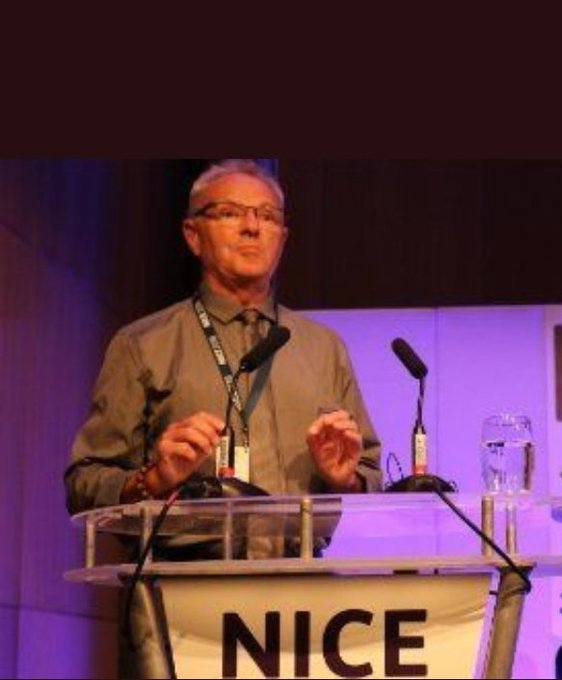
In addition, I was deeply upset when the NHS Trust, who commissioned one of my projects, failed to acknowledge its success. A poster was presented at the NICE Conference in 2015 and it was highly commended by NICE.

Prior to the Conference, I contacted the trust to let them know of the success and all attempts to engage the trust were ignored. As you can see on the poster (which was produced by NICE) the space for the trust’s logo, on the bottom left, is empty:

In fact, I had several examples of work on the NICE Shared Learning pages, none of which have ever been acknowledged in any way by local NHS Trusts, or any healthcare organisations in Cornwall.

In was fortunate in being successful in delivering the above children’s medicines project, which has had a lasting legacy – the appointment of a Paediatric Community Pharmacist. One of my protected disclosures was about this project. Specifically that I was pressured to alter a report which highlighted the urgent need for improvements in medicines’ safety. At the time there were people in senior positions who backed me up and the report remained unchanged. Since then, all these people have left the trust. More recently the trust was caught up in a ‘governance scandal’ which resulted in the Chief Executive and Board Members who had bullied me leaving suddenly.

3. The effect that the victimisation of healthcare whistleblowers has on patients

Thirdly, as I looked further into the problem, I began to see the full impact that the victimisation of genuine healthcare whistleblowers has on patients. This for me is the most shocking aspect of the problem.

In 2015 I set up the Turn up the Volume! Movement. This was an attempt to bring together all involved in an open and transparent way, with a focus on the core issue of patient safety.

Through this initiative I have met many more people in a similar situation and learned first-hand the effect lack of transparency and denial has on patients. This is well illustrated, for example, in the report of the Gosport Independent Panel Report (2018), where those who raised the alarm were initially listened to, then ignored and their concerns re-labelled as ‘allegations’. As a result of this, in the words of the report, ‘the lives of over 450 patients were shortened while in the hospital’.

Next steps

Based on my experience in trying to link together people in health and care with similar experiences and focus on patients, I believe there are three vitally important areas in healthcare that need addressing.

The need for an individual duty of candour

Firstly, I was shocked to find out that in the NHS the duty of candour (duty to tell the truth), brought in following the Mid Staffordshire inquiry, is an institutional duty of candour. This relies on staff telling the truth to their employer in order to highlight what went wrong.  Thanks to the tireless work of campaigner Will Powell the need for an individual legal duty of candour for professionals, managers & leaders in healthcare has been demonstrated. This has parallels to the calls for a ‘Hillsborough Law’. Without this, there is no real mechanism to hold individuals to account for cover-ups and for not being honest.

Making sure initiatives are effective

Secondly, I’m disappointed at the failure to learn and improve patient safety through listening to genuine whistleblowers, whether they be patents or staff, and failure to take measurable actions to change. I believe that the National Freedom to Speak Up [FTSU] Guardian initiative has had unintended negative consequences. Evidence suggests that whilst many trusts are using FTSU to solve problems and make improvements, it is making the situation worse in some trusts, where it is used as a cover for continued victimisation of those who speak out.

Ending self-regulation & providing independent oversight of whistleblowing

Thirdly, in common with industry, I believe that self-regulation in health and care does not work, and the only solution will be to set up a truly independent body to oversee and enforce this. This body must involve patients, who raise concerns at great cost to themselves and their families.

Health regulators in England and the people who they regulate are often uncomfortably close. For example, I was deeply disappointed when I found out only that the CQC Inspector involved in dealing with my concerns raised in 2013, later became employed as Compliance Lead in the same trust.

Author: Steve Turner

Revised and reposted: 04.03.2026

Related posts:

‘The systemic silent killer – ending the stigma around whistleblowing: a blog by Steve Turner’ (2023) on the Patient Safety Learning Hub.

Clegg, A (2022) How cronyism corrodes workplace relations and trust Financial Times. WWW: https://www.ft.com/content/98fdcde8-eba1-45b3-98a6-eceb5269e07c (accessed 23.01.2023)  


Accountability, clinical education, Clinical Governance, dutyofcandour, Ethics, health, healthcare, nhs, patients

Identifying bullying – ‘Secret squirrels’

Although I’m not an academic and haven’t studied bullying in depth, I’ve experienced it and I’ve also been in situations where, I now recognise, I took a bullying approach. This has led me to consider the difference between accountability and bullying:

Accountability
The key thing for me is the difference between holding people to account (e.g., by openly discussing problematic beliefs and behaviours) and bullying. 

Accountable actions are driven by the intention / motivation of helping all involved and building an interconnected community based on honesty and trust. (‘Tough love’ if you like).

‘Secret squirrels’
Contrast this to the scenario where bullies criticise people without being specific about what’s being questioned, act secretly and withhold information, blacklist people, create over complex rules which can’t be followed and hide behind bureaucracy and hierarchy.

Specific bullying behaviours include undermining, whispering campaigns, behind closed doors conversations etc.

Look out for cultures where the modus operandı is ‘kiss up – kick down’. If this is the case, the organisation has problems. It will not be able to deliver its aims effectively and may be creating an unsafe environment.

In my experience, around the time of my protected disclosure, I was involved in meetings and discussions where those who had set up the meeting had not stated the purpose of the meeting in advance (or on one occasion deliberately misled me). In these meetings they had clearly rehearsed their questions. Questions that were designed to belittle and discredit.

Sounds familiar?

In these cases, this seems to be motivated by a desire to cling on to power, deny failings, use ‘playground’ tactics and break connections which aren’t in line with the overall agenda (often not made public).

These behaviours are frequently the result of bullying from higher up the chain, and a culture where leaders are not comfortable with ambiguity.
Bullying in this context is not always recognised as such, and victims are made to feel it may be their fault. This compromises patient safety.

Bullying is a problem which affects all areas of work, and all sectors. I remain optimistic that, because of the profile this issue now has, things are changing. There’s a long way to go yet, and many injustices to be rectified.

‘People deal far better with uncertainty and stress when they know what’s going on, even if the information is incomplete and only temporarily correct. Freely circulating information helps create trust, and it turns us into rapid and more effective learners’

Margaret J Wheatley (2007) ‘Finding our Way. Leadership For an Uncertain Time’. Berrett-Kohler Publishers Inc. San Francisco

Last updated: 07.010.2025

Accountability, clinical education, Clinical Governance, health, healthcare, medicines, nhs, patients, prescribing

Having a plan – a short guide for patients

Following on from my blog on making the most of remote consultations, I realised it would be helpful to talk about the outcome patients should expect from consultations (wherever they are conducted). This blog is based on my clinical experience, on feedback from patients, carers and relatives, and on my experience of helping look after my mother at the end of her life.

There are some simple things that everyone should come away with at the end of a consultation. Knowing the plan & what the next steps are. Where to find information on what has been discussed and what to do if things get worse. If this information isn’t made clear, ask ‘what’s the plan?’

Consultation information:

At the end of the consultation, you must:

  1. Have agreed a plan (even if this is ‘watch and wait’, or a referral on)
  2. Have written information on what has been discussed & where to find support
  3. Know the signs of improvement or the signs of deterioration to look for
  4. Know when & who to contact if things change
  5. Know who to contact in an emergency

At the end of the consultation:

At the end of the consultation, you should know:

  1. That your concerns have been listened to
  2. That the agreed actions will be taken
  3. That you can seek a second opinion if needed
  4. That the consultation will be communicated to all involved in the patient’s care

You should also receive:

Written information on the consultation. This may be in the form of notes, a care plan or visit summary & copies of ALL communication between clinicians.

‘No decision about me without me.’

‘If you’re not provided your records (as you should be), you may wish to keep a record of your consultations yourself and / or record them. As a clinician I encourage this.’ – Steve Turner RGN; RMN; Ba(Hons); P.G. Dip. Ed

In a future blog I’ll look at communication and documentation. What form should this take? Covering all options including online access to records, patient-held notes, visit summaries, assessment letters, patient notebooks, body maps, recordings, images. How can we ensure patients & all involved have this information in real time?

Previous blogs in this series:

A guide for patients on remote clinical consultations

Giving a history – guide for patients


Steve Turner

I am now retired and writing on what I learned about patient-led care.

‘Putting patients in charge of their care, sharing information, learning together’

📹youtube.com/@SteveTurnerCareRightNow

_______________________________________

Author: Steve Turner

Date last updated: 16.02.2024

Accountability, clinical education, Clinical Governance, health, healthcare, medicines, nhs, patients

Using technology in care homes to improve safety- Electronic medicines administration systems – eMAR –

Introduction

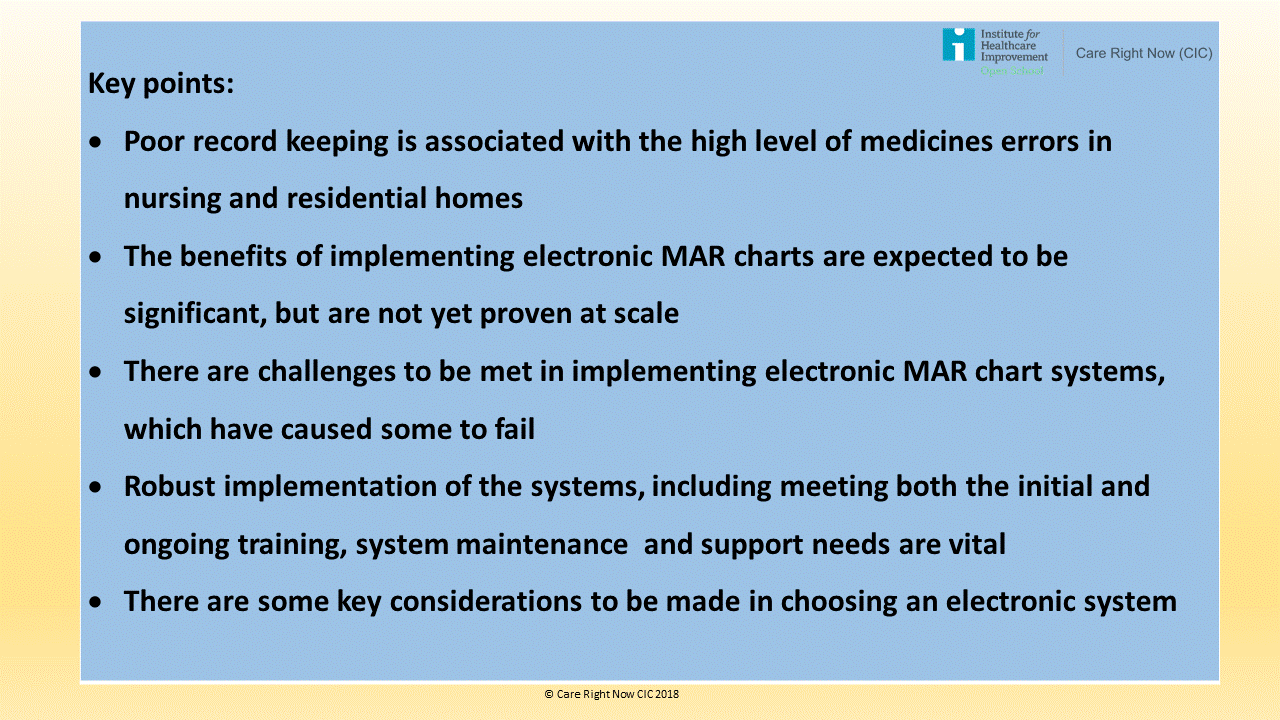
Medicines errors in care homes are unacceptably high. A key study found that residents taking seven or more medicines had a 79% chance of being victim of a medicines error (Alldred et all 2009). This led to several follow-up studies and actions to improve medicines management in care homes, including a move to implement electronic medicines administration [eMAR] systems. A recent study explored medication-related incidents and their causes in UK care homes. This review emphasised the need for improved medication management processes to reduce errors and enhance patient safety (Irons et al 2022).

Slide1

Best practice in medicines record keeping

The management of medicines in nursing and residential homes is part of a highly complex pathway.  It involves multiple staff groups and organisations.

These include the G.P.; all who prescribe medicines and treatments; Care Staff of all grades; Support Workers; Consultants; Specialist Practitioners; and Pharmacists.

Benefits of electronic MAR charts

The benefits of implementing electronic MAR charts fall into three categories.

  1. Improved legibility.
  2. Improved access (e.g., if the charts are accessed and updated on a computer or portable device there is less risk of losing, damaging, or mislaying them).
  3. eMAR chart systems that obtain the data taken directly from the Community Pharmacy system eliminate the need for transcribing.

Systematic reviews indicate that carefully planned and implemented eMAR systems contribute to a decrease in medicines errors, reduced administrative costs and improved quality of care (Gates et al 2021).

Challenges of implementing electronic MAR charts

There are three ‘bottom line’ challenges to manage when transitioning to electronic MAR charts.

1. Assessing potential eMAR systems. This is critical, as poorly designed systems will not deliver benefits, and eventually fail. The system must be easy to use and free of unnecessary jargon, using only approved acronyms or mnemonics. Electronic systems also offer the opportunity to introduce features which enhance safety, some of which, such as time ordered charts, are difficult to include in a paper-based syste

Here’s a some key features to look for:

  • Photo identification
  • Time ordered charts
  • Body maps
  • Drug images
  • Start and finish dates
  • Insulin charts
  • Warfarin charts
  • As required – prn- charts
  • Does the system record the reason prn medicines were given?
  • Medication history
  • Medication profiles
  • How the system records allergies and sensitivities
  • What alerts and warning messages are included?
  • How the system copes with medicines dispensed directly from hospitals
  • How does the system cater with titration of medicines and variable doses
  • How does the system cater with weekly medicines (e.g. alendronic acid)?
  • Use of monitoring information (e.g. INR for warfarin administration, lithium level recording, BMI, B/P, pulse etc.)
  • That the system uses up to date approved terminology
  • Does the system records medicines not given or partially administered, with a reason?
  • How the system can be used to order and control stocks of medicines
  • How easy is it to produce reports from the system?

2. Data Security and Protection. It is vital that the system handles patient consent; patient confidentiality, system access; ownership of patient identifiable data; storage and transfer of data in a way which is compliant with the laws and regulations of your part of the U.K.

All organisations and systems that access to NHS patient data must successfully complete the NHS data security and protection toolkit [DSPT]. This toolkit provides assurance that the system suppliers are handling data safely and that personal information is handled correctly. You can search the supplier’s NHS DSPT registration here: https://www.dsptoolkit.nhs.uk/OrganisationSearch

3. Process Reviews. It is important to look at your current processes and how the new system will work. For example, there have been problems where urgent acute prescriptions were supplied by a different pharmacy from the pharmacy linked to the home’s eMAR system. The eMAR system must be able to cope with all aspects of prescribing from multiple sources and prevent information having to be duplicated.


Training and support requirements

Quality training and support, both during the implementation and on an ongoing basis, underpin all successful healthcare I.T systems. There are four areas which are sometimes overlooked that deserve special mention:

1.  Many of the users of eMAR systems will be Healthcare Assistants or other non-registered skilled staff. As a result, it will be important that the training they receive reinforces their duty to keep accurate records, that they know where to go for help and advice and their role and responsibilities are made clear.

2. A substantial number of staff may speak English as a second language. Therefore, it is important that eMAR systems do not use any unnecessary jargon, and that any help text is in plain language.

3. Appropriate knowledge of Data Protection (GDPR) and Information Governance rules and regulations is essential and should be built into any training programmes.

Overall, consideration needs to be given to the nature and content of the training needed to implement the system, including how this is linked to the policies and procedures and overall governance of the home.

Good suppliers will be able to give advice and support on this.


Conclusion

Record keeping in medicines management is a critical safety area for care homes. The current high level of medicines errors is in care homes affects half a million people in England.

The prospect of implementing electronic systems for recording medicines administration holds great potential but is not itself without risk. It needs to be approached carefully in the light of the complex arrangements and multiple organisations involved in prescribing, supplying, administering, dispensing and monitoring medicines for your residents.

Given the considerations over choice and implementation of systems, eMAR can overcome problems of legibility, transcribing, and access to records and information in a way which is not possible with paper systems.

In years to come it is likely that, just as most G.P.’s would not want to return to paper systems, care homes will come to see electronic systems in the same way. The main beneficiary of this will be the residents in terms of improved safety.


References:

  • Alldred P, Barber N, Buckle P et al (2009) Care home use of medicines study (CHUMS): Medication errors in nursing and residential care homes – prevalence, consequences, causes and solutions. Report to the Patient Safety Research Portfolio. Department of Health, London.
  • Peter J Gates, Rae-Anne Hardie, Magdalena Z Raban, Ling Li, Johanna I Westbrook, How effective are electronic medication systems in reducing medication error rates and associated harm among hospital inpatients? A systematic review and meta-analysis, Journal of the American Medical Informatics Association, Volume 28, Issue 1, January 2021, Pages 167–176, https://doi.org/10.1093/jamia/ocaa230
  • Irons, M. W., Auta, A., Portlock, J. C., & Manfrin, A. (2022). Medication errors and processes to reduce them in care homes in the United Kingdom: a scoping review. Home Health Care Services Quarterly41(2), 91–123. https://doi.org/10.1080/01621424.2021.2007196


Author: Steve Turner RGN, RMN, Ba (Hons), PG Dip Ed – a retired experienced nurse educator, who has worked in strategic consultancy and on change projects across healthcare in the UK.

Blog last Updated: 28.02.2026

Accountability, clinical education, Clinical Governance, Community Care, Ethics, health, healthcare, Law, medicines, nhs, prescribing

Psychotropic medicines for people with learning disability / autism

Prescribing psychotropic medicines for people with learning disabilities / autism who show symptoms of distress*

( #jargonbuster – psychotropic medicines = The phrase “psychotropic drugs” is a technical term for psychiatric medicines that alter chemical levels in the brain which impact mood and behaviour. Often referred to as anti-psychotic medicines).

Summary:

People with learning disabilities and / or autism can be prescribed antipsychotic medicines for reasons other than to treat psychosis. This is a complex area that involves detailed knowledge off the patient and inclusion of everybody concerned with their care. This includes parents relatives and carers and must involve anyone with power of attorney [LPA] or a Court of Protection Deputyship. This piece sets are some of the key areas to consider when prescribing in the form of an aide memoire. It is important to note that the art and science of prescribing is not simply about writing a prescription. It is also prescribing decision if a medicine is stopped, changed or the dose altered, or if a non-medical option is chosen. Avoiding unnecessary prescribing should be an absolute priority and all guidelines refer to this. On the other hand, some patients require unusual medicines regimes. If this is the case, then the reasons for this must be fully documented as part of a multidisciplinary process including best interest decision-making. This must then be regularly monitored and reviewed.


Key points:

Facts:

  • Most of the prescribing in this area is ‘off label’ ( #jargonbuster – that’s medicines prescribed for something that isn’t listed as an ‘indication’ for that medicine, or is over/under the recommended dose).
  • This prescribing can include multiple anti-psychotic medicines, often medicines in the same class. There is a limited evidence base for this type of prescribing. Concurrent prescribing of this nature renders the medicines off-label.
  • Psychotropic medicines in people with learning disabilities / autism who show symptoms of distress* should be initiated by an appropriate specialist, after which they are not always prescribed by a specialist in this area.
  • Diagnostic overshadowing may lead to inappropriate prescribing.

Diagnostic overshadowing is the attribution of a person’s symptoms to their mental condition, when such symptoms actually suggest a comorbid condition.

Actions to take for each person:

  • A Holistic assessment including taking all measures possible to understand why the person may be distressed, and taking actions to alleviate this, based around the person.*
  • Ensure that the prescribing takes into account the tests and  monitoring required for safe prescribing, and takes into account the latest national and local guidelines.
  • Before prescribing it’s important to understand all triggers and environmental factors. Plus the reasons for behaviour now and what has happened in the past, including what works well and what acts as triggers*.

There are ongoing concerns that psychotropic
drugs are used inappropriately in people with
intellectual disability. [2]

After exploring ALL options, if medicine is thought to be the answer:

  • Ask about allergies, sensitivities and adverse reactions to medication. Check the documentation on this and ensure it’s recorded accurately (e.g. if the person has reacted to a drug is the nature of the reaction recorded in full, and has it been shared with all involved in the person’s care).
  • Take into account views of family and carers.
  • Take into account any advance decisions and support plans.
  • Take care to avoid diagnostic overshadowing.
  • Ensure there is specialist initiation and review of the prescribing.
  • Ensure Multi-Disciplinary team involvement & inter-organisational involvement.
  • If the prescribing deviates from guidelines (for example around tests and monitoring required and dosage) this must be documented, with a reason.
  • Act in accordance with the Mental Capacity Act [MCA] , where capacity to make a specific decision is lacking. (NB: Mental Capacity assessments must be time and decision specific).
  • Best interests decisions must involve all parties, be fully documented & regularly reviewed. This includes involving people who have Lasting Power of Attorney [LPA] or are Court of Protection Deputies.
  • Where appropriate, use a tiered approach to prescribing – ‘start low, go slow’.
  • Ensure involvement of Second Opinion Appointed Doctors (SOADs#) to provide a statutory safeguard where consent is an issue.

Follow up and monitoring:

  • Confirm the monitoring required and ensure a process is in place for this.
  • Set a review date.
slide13

Link to above page (section 4 of the MCA on best interests)

#‘SOADs visit the person and explore the current and proposed treatment, certifying what is considered to be appropriate and reasonable in circumstances where the person cannot or does not consent to it, discussing it with team members and the person before reaching their conclusions.’

  • Clear documentation is vital:

    • Of the holistic assessment
    • Of the condition that’s being treated by the medicine(s)
    • Of the indication for each medicine (i.e. what it is being prescribed for) is explicitly documented, and this information is available to everyone involved in their care.
    • Of possible precipitating factors and measures that help the person*
    • Of patient involvement
    • Of carer and family involvement
    • Of multi-disciplinary team involvement
    • Of the decision making process and rationale for any best interests decision(s).
    • Of the rationale for prescribing / not prescribing
    • Including review dates and evidence of reviews
    • Real time monitoring of the effect of the medicine(s), including any as required ‘prn’ medicines.
    • Documenting evidence of changes in response to the medicine(s) not being as expected, including if the medicines has no effect, and the actions taken on this.

Information sources and links:

  1. Royal Pharmaceutical Society [RPS] (2021) A Competency Framework for All Prescribers  https://www.rpharms.com/resources/frameworks/prescribing-competency-framework/competency-framework 
  2. Royal College of Psychiatrists – Faculty of Psychiatry of Intellectual Disability (2016) Psychotropic drug prescribing for people with intellectual disability, mental health problems and/or behaviours that challenge: practice guidelines. Document Ref: FR/IXD/09 http://www.rcpsych.ac.uk/docs/default-source/members/faculties/intellectual-disability/id-faculty-report-id-09.pdf?sfvrsn=55b66f2c_6

Personal views of Steve Turner RGN; RMN; Ba (Hons); P.G. Dip Ed Feedback and views welcome, send them to carerightnow@gmail.com 

Steve is a retired nurse prescriber, former Head of Medicines and Prescribing for @MedicineGov , former Associate Lecturer at Plymouth University  and a former NICE Medicines and Prescribing Programme Associate.


Version 7   Dated 25.11.2024

Revision history:

25/11/2024

Out of date links removed, information sources updated, some text & links removed. Extra explanatory text added.

03/05/18

*Following feedback from parents & carers I’ve changed some wording and added some additional wording which puts the patient first. Thank you for the feedback.

12/12/2018

Updated with link to the RPS Competency Framework for all Prescribers, following feedback from readers.

09/01/2019

Updated to include reference to diagnostic overshadowing.

14/01/2019

Updated to include allergies, sensitivities adverse reactions and feedback from teaching sessions.

15/01/2018

Updated to include specific mention the Mental Capacity Act.

20/04/2019

Notes that medicines related option should only be considered if non-medical options have not worked. Minor amendments to text.

21/08/2019

Updated following feedback re: evidence base on prescribing combined antipsychotics. Point revised, new sentence and link added, ‘There is a limited evidence base for this type of prescribing.’

18/10/2021

Updated to include reference to the updated RPS Prescribing Competency Framework for All Prescribers.