Uncategorized

Mum’s Story – Mavis Turner 1929 – 2020

Mum aged 8 months and the Challenge Shield – 1930

Mavis Bowers was born prematurely on 26th September 1929, at home in Bull Hill Stafford. She had a twin brother David who only lived for a short while. Mum was ‘smaller than a bag of sugar’ when she was born and for the first weeks of her life had to be washed in olive oil, dressed in doll’s clothes and a small drawer was used as a cot. Her birth wasn’t registered for two months.
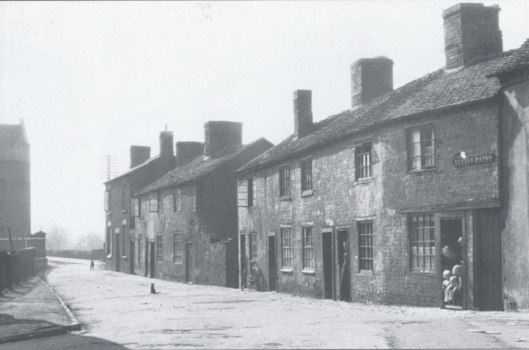

When the picture of mum and the challenge shield was taken mum was eight months’ old, & still not able to sit up for herself. The wooden “Challenge Shield” was an engraved silver plaque for “Stafford Infant Welfare Centre’s Annual Competition for infants during their first year”. This began in 1920 and ended in 1948 (the year the NHS was set up). Mothers who won were presented with one small shield which they could keep, and the large ‘Challenge Shield’ which they kept for 12 months. They also pushed the baby in a pram along Stafford’s main street at Stafford Pageant. The silver plaque was made by G & S Ltd.
Mavis’s mother Frances Bowers brought up her three daughters on her own. They lived in Prospect Road, Coton Fields, Stafford.
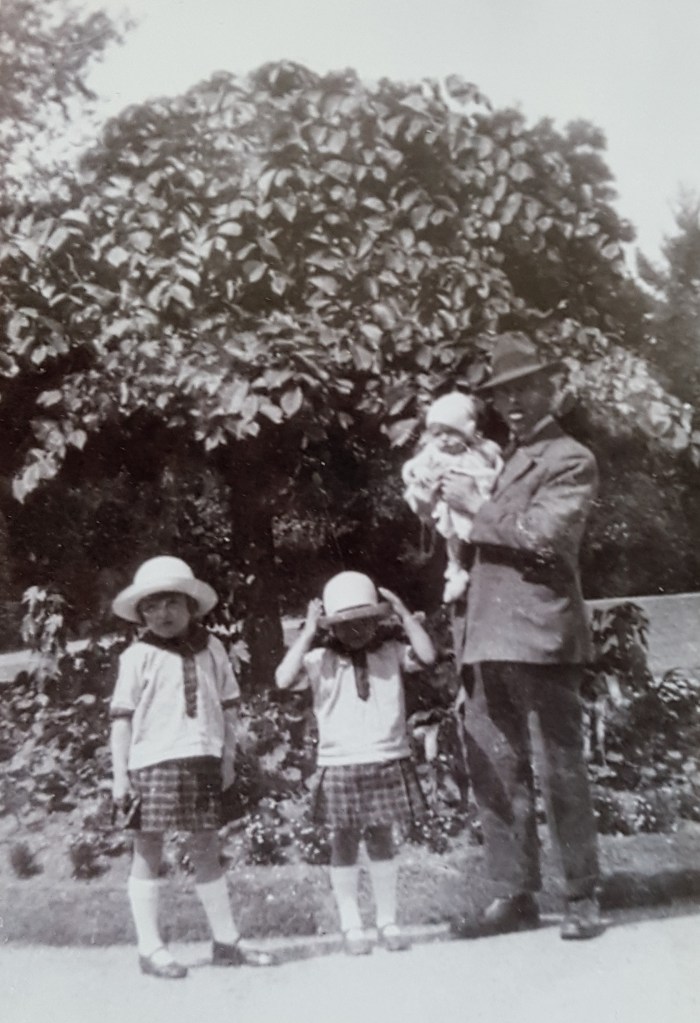
Mavis in her dad’s arms, with sisters Olive and Joyce


Another picture shows Mum and her older sisters, Olive and Joyce with mum in her dad William Bowers’ arms . Shortly after this my grandad William went into St George’s Hospital, where he remained until he died, about 30 years later. Mum can remember visiting him in the hospital as a young child. She described how there were many doors to unlock and how the attendants (this was before mental health nurses) were very kind to her and her mother.
We now know granddad had some sort of post traumatic illness, although at the time people didn’t talk about it, and it was said he had been ‘gassed in the first world war’. We have now found out that Fabry disease runs in the family (originating on mum’s side). This rare enzyme disorder, which causes limb pain and organ degeneration, has been misdiagnosed as a mental illness in the past. We wonder if that’s what granddad was suffering from.
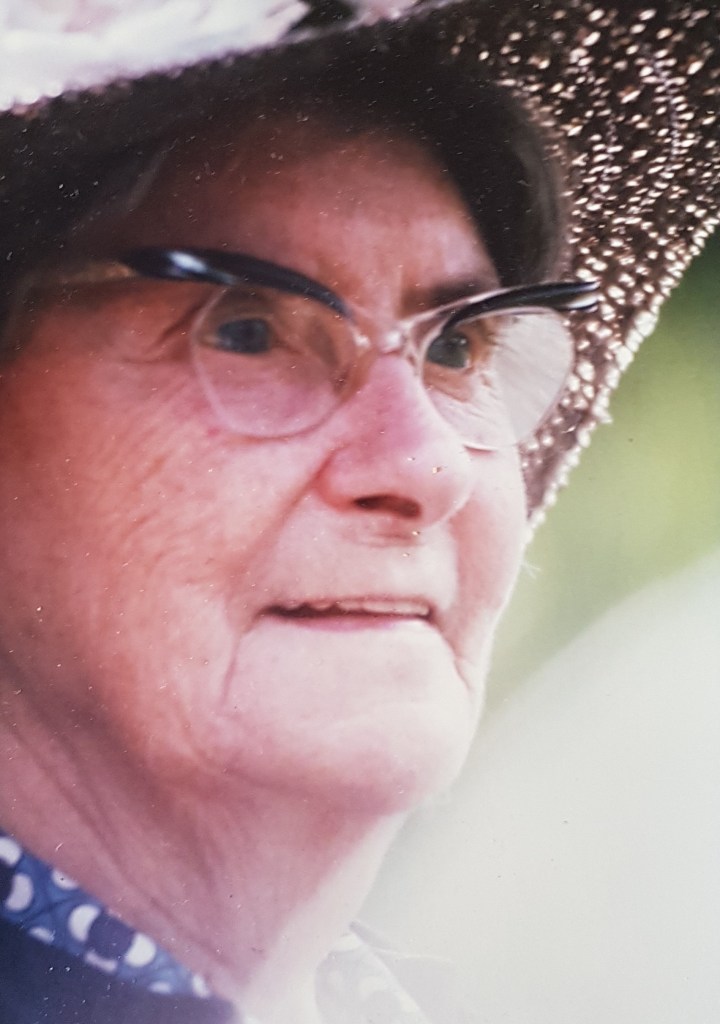
Frances Jane Bowers – Mavis Turner’s mother

Mavis and her two sisters brought up in poverty by their mum Frances. Mum remembers her childhood as happy and secure. One of mum’s memories was being sent by her mum to fetch dripping from a local hospital. (Dripping is the fat and juices that come off roast meats.) Mum and her sisters had to take a walk across some fields, where they used to be frightened of the horses, and knock at the kitchen door of the hospital. They then gave a penny for a jug to be filled with dripping. Mum also remembered how her mother used to wash and dry the girl’s school clothes every night, as they only had one set of school uniforms.
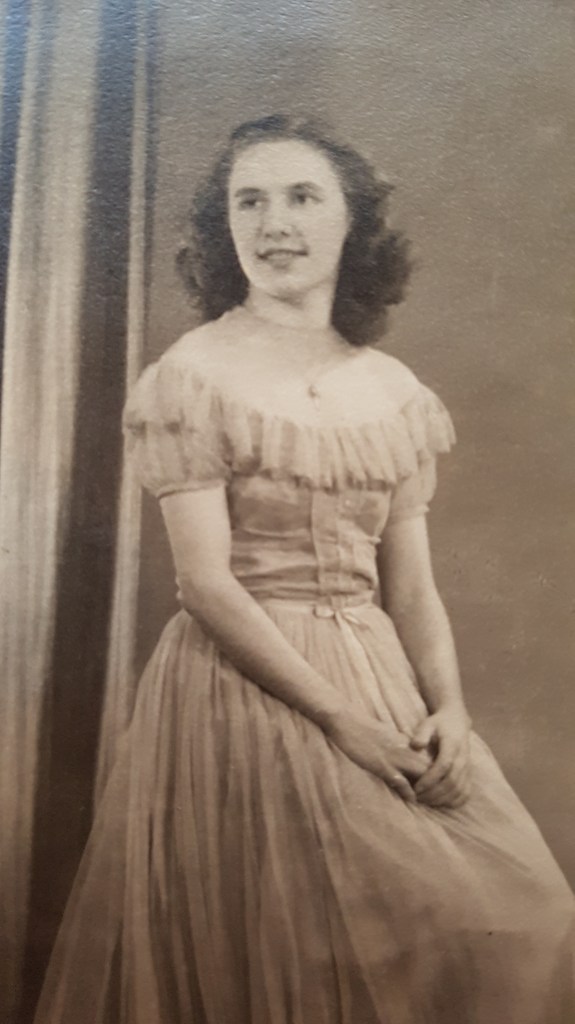
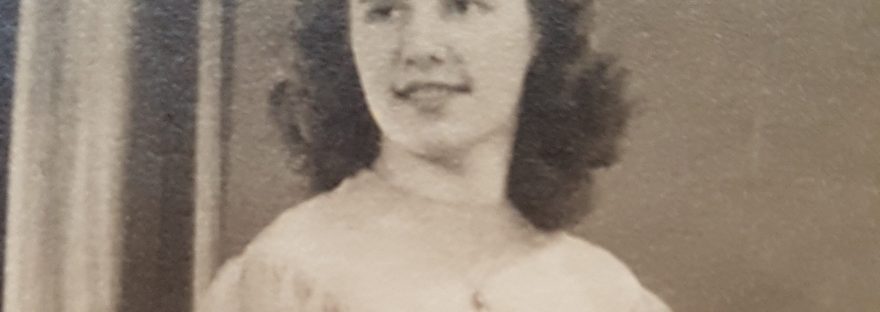
Mum aged 18 in a dress she made herself.

Mum’s upbringing made her really appreciative of the small things in life and never to take anything for granted.
Mavis and Jim Turner

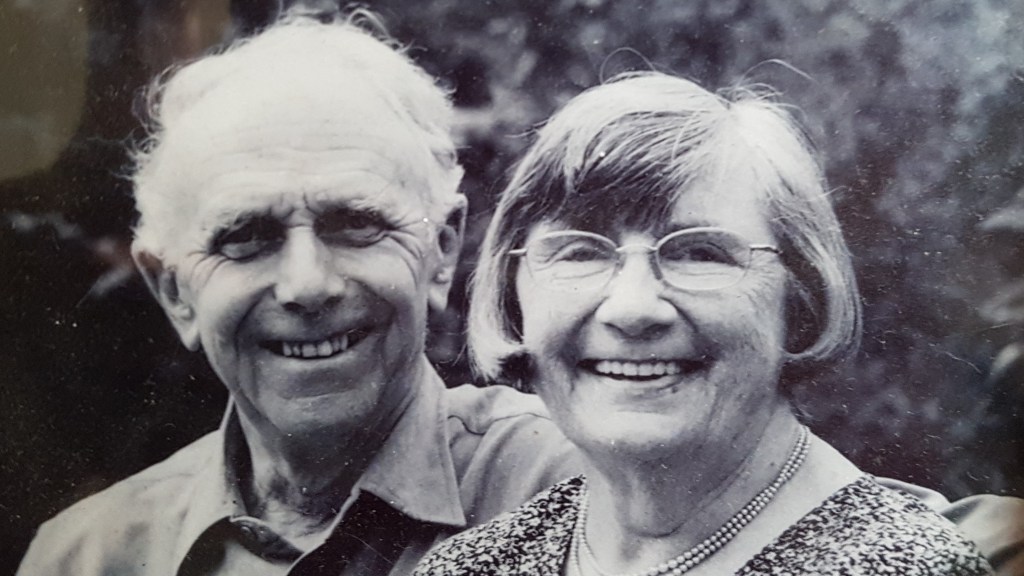
After leaving school at 14 Mavis started training as a seamstress and later worked at Lotus shoe factory. Mavis Bowers married Jim Turner a chartered electrical engineer, originally from Plymouth, who worked at English Electric in Stafford, and went on to have two sons, Steve and Nick. Mavis enjoyed sewing and, after the children left, worked from home as a seamstress. Mavis and Jim enjoyed travel and visited Europe often when they were older. At the age of 70 Mavis also went to Australia on her own and had the holiday of a lifetime travelling from Melbourne to Townsville in north Queensland, visiting friends of her son Steve who have lived there for 5 years. After 59 years of marriage Jim Turner died in 2012.

Mungo Lakes, New South Wales,Australia – acrylic on canvas -Mavis Turner

Mum took up paintings at age 80 and completed several pictures, some abstract and some from memory. The picture above is of Mungo Lakes, where mum visited when she was in Australia.

Suma Ahenkro Girl’s Education Project, Ghana (2020)

In the latter years of mum’s life she had glaucoma, osteoporosis Parkinson’s disease and heart failure and was unable to leave the house. Despite this mum remained independent and lived on her own, with carers visiting. This continued until a couple of years before she died, when she had a live-in carer.

For the final months of mum’s life she was cared for by Belinda Comfort Damoah. Belinda stayed with mum for six months, throughout the covid-19 epidemic, and is held in high esteem by mum, all the family and friends.

I was able to spend the final 12 weeks of mum’s life helping look after her at home, where she passed away in July 2020.

Belinda has recently spearheaded the formation of the Akwaama Toprefo Female Club (ATOFEC) which has the education of young women and the skills training of women as it’s objective.

We collected for this project at mum’s funeral, and the family is proud to be linked with such a worthwhile endeavor. Mum’s picture now hangs on the wall of the schoolroom.


Written by Steve Turner Version dated: 14.12.2020

Revisions: Picture of Bull Hill, Stafford added. 25.01.2021


Thanks to Melanie Williamson, Collections Assistant, Staffordshire Archives and Heritage, Staffordshire County Council for finding the shield and providing pictures and information.
Website: http://www.staffordshire.gov.uk/archives
Facebook: http://www.facebook.com/StaffordshireArchivesandHeritage
Twitter: http://www.twitter.com/@ArchandHeritage
Uncategorized

Making the most of remote consultations – a guide for patients (*rolling blog)

It is increasingly common for clinicians to carry out consultations with patients over the ‘phone or on the internet.

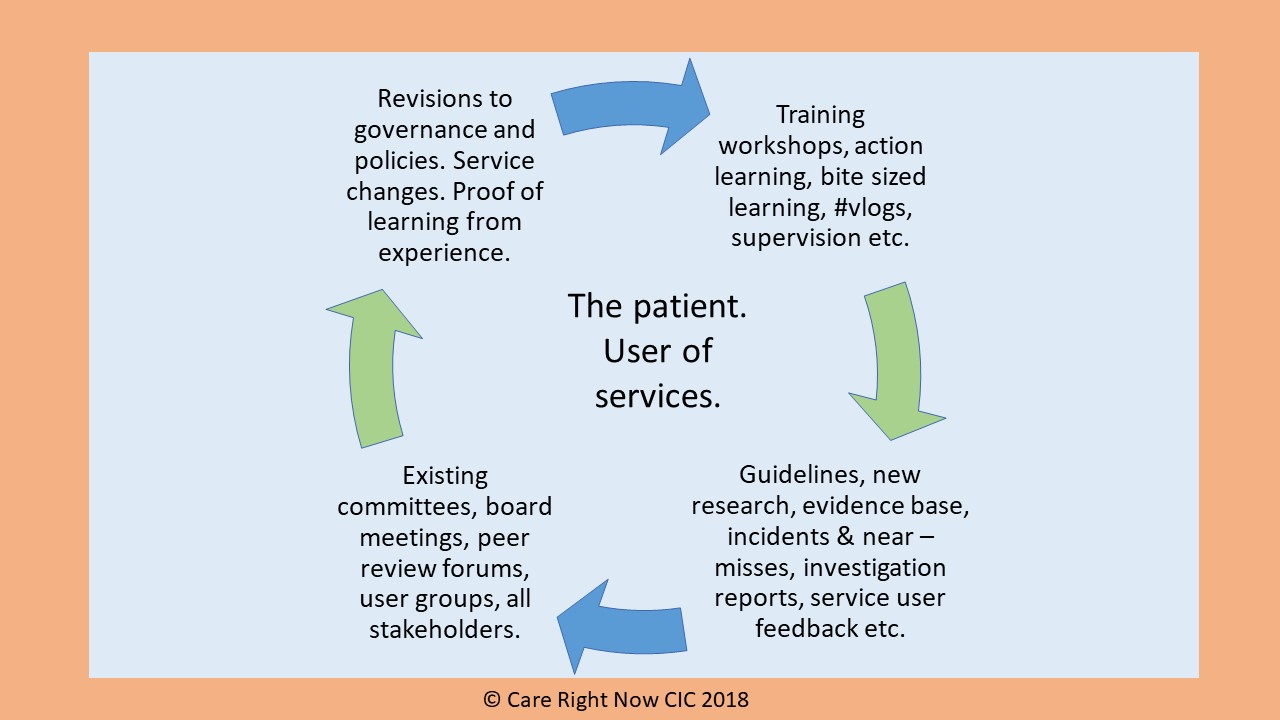
If you have time to prepare for the consultation here are some suggestions. This is part of our patient led clinical education work. The aim being to help all patients / users of health and care services lead on their own care.

In some cases, you may be talking to someone who has never met you, so preparation is key.

Here is some general advice:

Preparation

  1. Write it all down beforehand if you can, as it’s difficult to remember otherwise.
  2. Take some observations if you are able. Temperature blood pressure heart rate other measurements, including your feelings, mood and areas such as sleep & appetite. If the problem is something visible (like a rash for example) send pictures & monitor changes over time.
  3. Tell them how you are different from your norm.
  4. Tell your story of why you are calling, in your own words.
  5. Be honest and remember mental health and physical health are equally important. Inseparable in fact.
  6. Ask if you don’t understand anything.
  7. Don’t be afraid to check that the clinician has followed what you are saying.

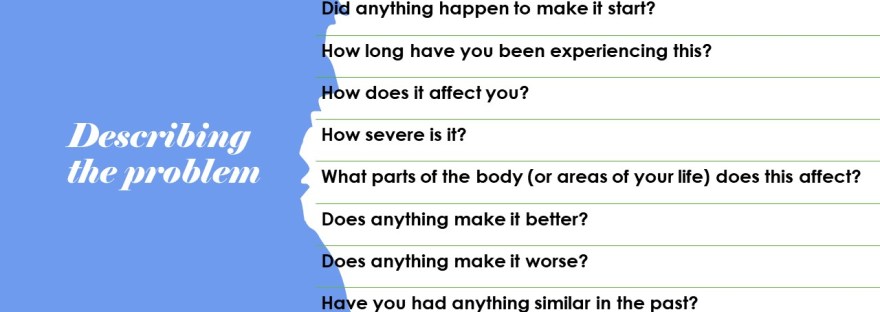
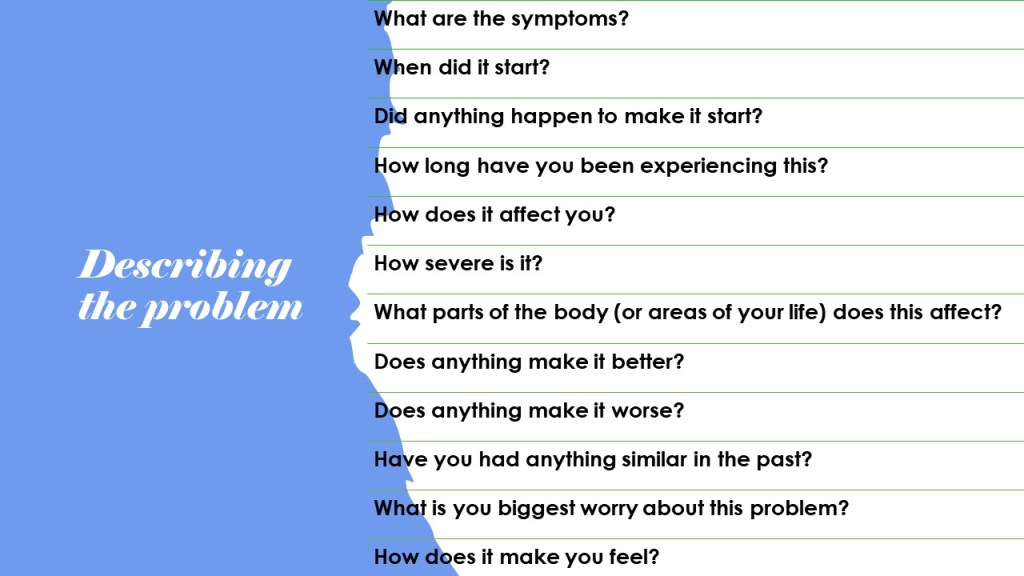
It’s important that you are allowed time at the outset to tell your story in your own words, to be able to share your ideas, your concerns and what you are expecting for the consultation. If you are speaking to someone who doesn’t have access to your medical history, they will also go through this with you in detail.

This checklist will help you prepare for the consultation and lead to an agreed plan for what to do next. Think particularly about what you would like to have happen. This is a question you may well be asked.

A screenshot of a cell phone

Description automatically generated

Your clinician will also need to refer to your medical history. If they have this to hand they may check that it’s up to date with you. Often they may not have this information and will have to go through your history with you. This is vital in order to ensure you come up with an appropriate and safe plan for your care. Click here for a second short blog on giving a history.

Medicines and treatments (of any kind)

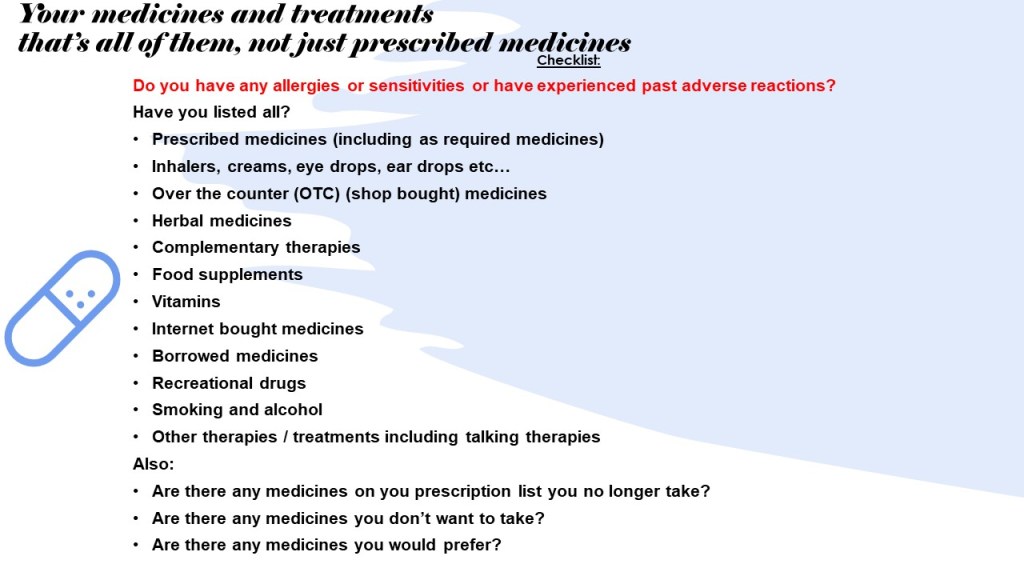
Consultations often involve medicines and treatments. Because of this it’s important that you share details of all medicines and related substances you take, not just those that are prescribed. This includes herbal medicines, over the counter medicines, supplements and anything borrowed or bought over the internet. It’s vital to be honest, as interactions can be very serious, sometimes fatal. Your clinician will not think badly of you if, for example, you don’t take a prescribed medicine or are trying something else. Statistics show that at least 50% of people don’t take their medicines as prescribed. That’s 50% of the whole population with mental or physical illnesses, not just a specific group of people.

Remember a medicine isn’t always the answer, share with the clinician details of non-medicine related treatments and approaches you take, and how well this works.

This chart shows the information you need to share. Very importantly this includes details of any allergies or sensitivities and how these affected you.

What happens next – The plan

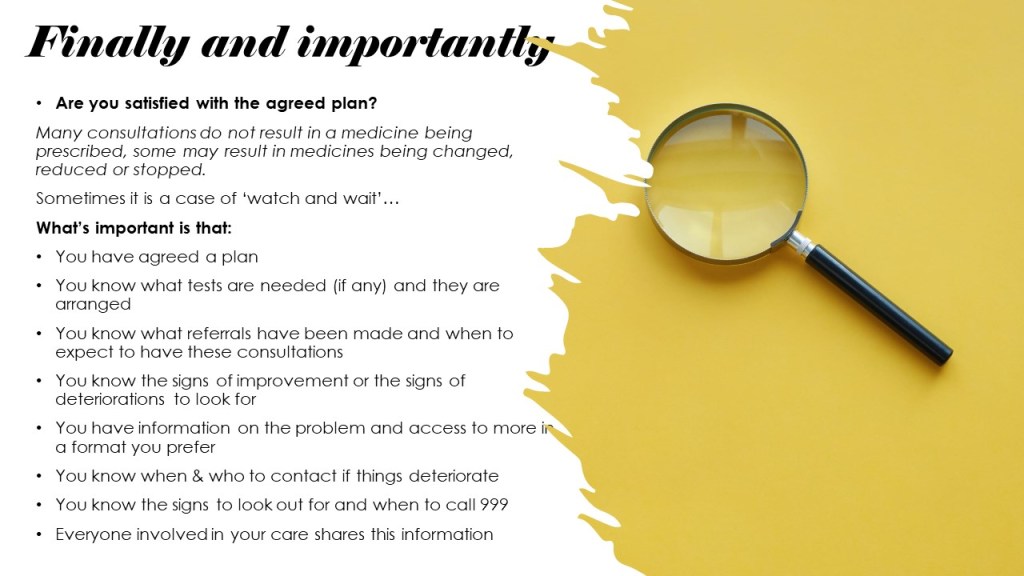
Finally, many consultations do not result in a medicine, or specific treatment, being prescribed. Some may result in a medicine or treatment being stopped, changed or reduced. Sometimes it’s a case of ‘watch and wait’. The most important thing is that both the patient and clinicians have agreed on plan, know how to monitor progress and what to do if things change.

What’s important is that:

  1. You have agreed a plan
  2. You know what tests are needed (if any) and they are arranged
  3. You know what referrals have been made and when to expect to have these consultations
  4. You know the signs of improvement or the signs of deteriorations to look for
  5. You have information on the problem and access to more in a format you prefer
  6. You know when & who to contact if things deteriorate
  7. You know the signs to look out for and when to call 999
  8. Everyone involved in your care shares this information

Summarised in the chart below:

*This is a rolling blog. I welcome all suggestions for amendments, deletions and additions from everyone. Please email carerightnow&gmail.com

I am grateful to my friends and colleagues who helped me put together this information.

Steve Turner is a nurse prescriber, now retired, & former Associate Lecturer at Plymouth University. Steve shares health information from the Twitter account @MedicineGovSte


Revision History:

16.02.2024 – Updated contact details & links.

30.06.2022 – Changed to reflect that the author is now retired.

27.04.2020 – added a note about taking and sending pictures (‘Preparation’ point 2.)

Uncategorized

Life in Lockdown: Coronavirus (StAustell Voice 15.04.2020)

I was working up to retirement when Coronavirus hit us. I work on clinical education and service development. I have lived in the St Austell area for 18 years. Some of my work, such as supporting Pharmacies in the North West, was already carried out from home.  Most of my teaching work has now stopped so I have applied to return to #NHS. While I’m waiting to hear back, I’m sharing health information from my Twitter account @MedicineGovSte using hashtags: #TeamPatient #TeamNHS #TeamCOVID19 .

I am also helping coordinate mum’s care. Mum is 90. She lives 300 miles away & is very frail & poorly. Normally my brother & I would go straight to her when she needs us. So this is a really worrying time. Mum has fantastic carers; community support and a great GP. Because mum has multiple long-term conditions and is seen by several different health and care teams, I am finding that the coordination I do for her is vital to ensure that she receives the best care, nothing is duplicated, she receives her medicines and has the right equipment in the home. If any local families have any questions about coordinating care for a loved one please let me know. I’m happy to share some tips. steve@carerightnow.co.uk

I’ve also started a serives of blogs based on our patient led clinical education work. The first one is on telephone consultations: click here to see it.

More than ever now, we love to spend time in our garden. We’re planting vegetables and the garden’s looking better than ever.

Take care #StAustell

Steve Turner is a registered general and mental health nurse prescriber and Managing Director of Care Right Now CIC. http://www.carerightnow.co.uk

First published in the StAustell Voice

tseUCsaH.jpg small

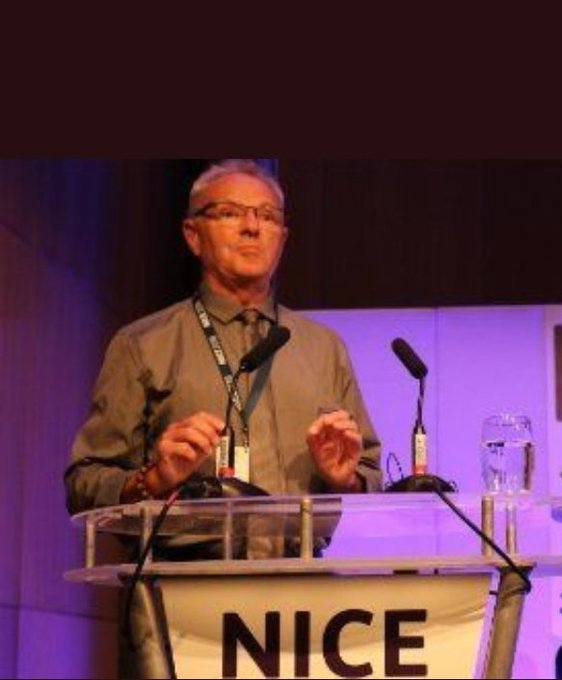
Steve is Head of Medicines and Prescribing for @MedicineGov , Associate Lecturer at Plymouth University  and a former NICE Medicines and Prescribing Programme Associate.

@MedicineGovSte

LinkedIn profile.

info@carerightnow.co.uk

Author: Steve Turner

First published: 16.04.2020 Revised: 27.04.3030

Version:1c


Uncategorized

‘Are my medicines really necessary?’

New icon114x114

‘Are my medicines really necessary’ is one of the most frequent questions from our patient led clinical education sessions.

In this blog Steve Turner, Head of Medicines & Prescribing @MedicineGov,  reflects on the need to combine research and guidlelines with the patient’s actual experience, when deciding on medicines.

My experiences and learning

I was speaking about the use of medicines at a conference when I mentioned that medicines are ‘over prescribed’. Although nobody questioned and challenged me on this I was troubled by my use of this expression. By saying medicines are prescribed too frequently it seems to me this can be interpreted as a bad reflection on the prescribers.

As I mentally mulled this over (I’m not a quick thinker) I came to the conclusion that a beter expression may be ‘medicines are overused’. After all it’s us (the patients) who go to our Doctors, Pharmacists and Nurses and us who accept their prescriptions. Therefore if we agree that people can rely too heavily on medicines, and there’s wealth of evidence for this, then we need to sort this out together.

My social enterprise company’s Patent Led Clinical Education work came about because a large section of the population are prescribed multiple medicines, with potential for interactions and increased side-effects.

It’s widely accepted that 50% of the population don’t take their medicines as prescribed. Add to this the sometimes overlooked fact that people also use alternatives including over the counter medicines, herbal medicines , suplements, illicit drugs, self-medicate with alcohol, buy medicines over the internet, or borrow medicines from other people.


‘The human and financial costs of over use of medicines are immense. ‘


In our patient led clinical education sessions we have learned that many people don’t know what their individual medicines are for, and we see how many medicines are prescribed purely to counteract the side-effect of another medicine can pile up.


‘So far, nobody who has attended one of our sessions has expressed a wish to take more medicines, and those who did express a view all said that they didn’t want to take medicines if they didn’t have to.’


So what can we do together?

This blog aims to help us make sense of the vast amount of guidance available and describing why ‘trusted information’ is important in making decisions about medicines, and why this is only helpful if it it’s linked to the patient’s actual experience.

So much information, so many policies & guidance?

There’s an overwhelming amount of information and guidance on medicines, coming out on a daily basis. Even clinicians struggle to keep up and need help.

Two things are important in trying to make sense of this information overload.

  1. Making sure that the information you are looking at is from a ‘trusted’ source, (by this I mean ones that your prescriber is expected to use). see http://www.medsinfo.guru
  2. Linking this to patient experiences and support from others who have the same conditions.
  1. ‘Trusted’ information

The National Centre for Heath and Care Education [NICE] in England produces guidance, standards, indicators and evidence services covering health and social care. It’s not just about medicines. There’s a massive amount of trusted information on their web site, which covers:

  • Conditions and diseases
  • Health protection
  • Lifestyle and wellbeing
  • Population groups
  • Service delivery, organisation and staffing

To get a feel for this one place to start is the NICE Pathways, where you can browse the topics, pick one and have the information presented in a diagram, where you can click on the headings for more information.

In some areas has been a move away from producing guidelines on a single illness or condition to a more holistic person based approach. This better reflects the complexities of real life, where it would often be a luxury to have just one illness with no complicating factors. NICE guidance on medicines optimisation, multi-morbidity clinical assessment and management, and patient experience in adult NHS services are good examples.

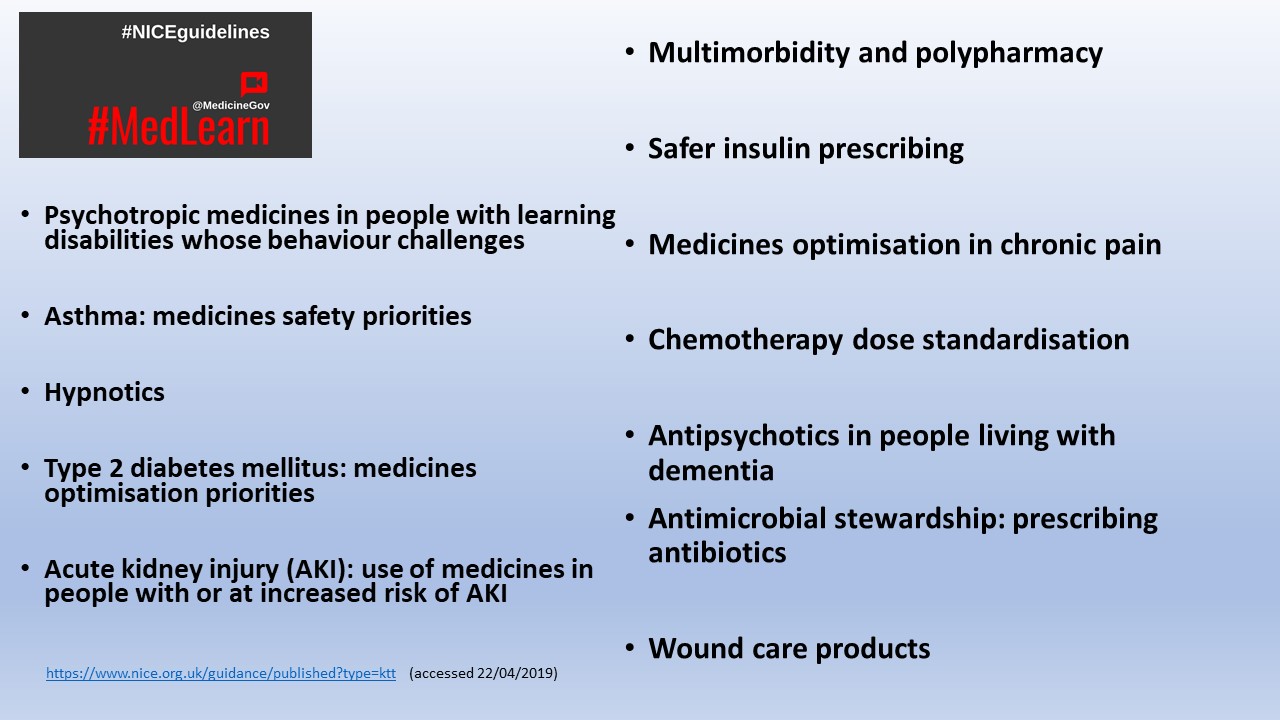
In addition NICE produces a document on Key Therapeutic Topics as part of the NICE Medicines and Prescribing Programme. This document is reviewed and refreshed annually. Click here for the topic list.

Slide19

2. Patient experiences

Medicines (for adults) are tested and approved before that can be prescribed, and their safety is monitored, especially in the early stages, or if there are concerns (‘black traingle’ drugs). However drug trials are most often carried out on relatively small groups of people, usually from a limited range of ethnic groups, who who do not necessarily represent the population as a whole. For example, these ‘controlled trials’ usually exclude people with multiple illnesses, heavy drinkers or smokers, older people, and people with other illnesses such as addiction or mental ill health.

Controlled drugs trials are not carried out on children.

In addition the effect of medicines, including side-effects fall into two categories. Firstly, those that can be predicted (pharmaco-dynamic effects – that the effect of the drug on the body). Secondly, those that vary according to the bodily make up of the patient (called pharmaco-kinetic effects – the effect of the body on the drug).

It’s only when you combine the guidance with the specific circumstances of the patient, including the ethnicity and physical make up and lifestyle of the patient that a decision on a medicine can be made effectively. For this to work, the patient must be part of this decision, and be allowed to lead on their own care. Our work shows this:

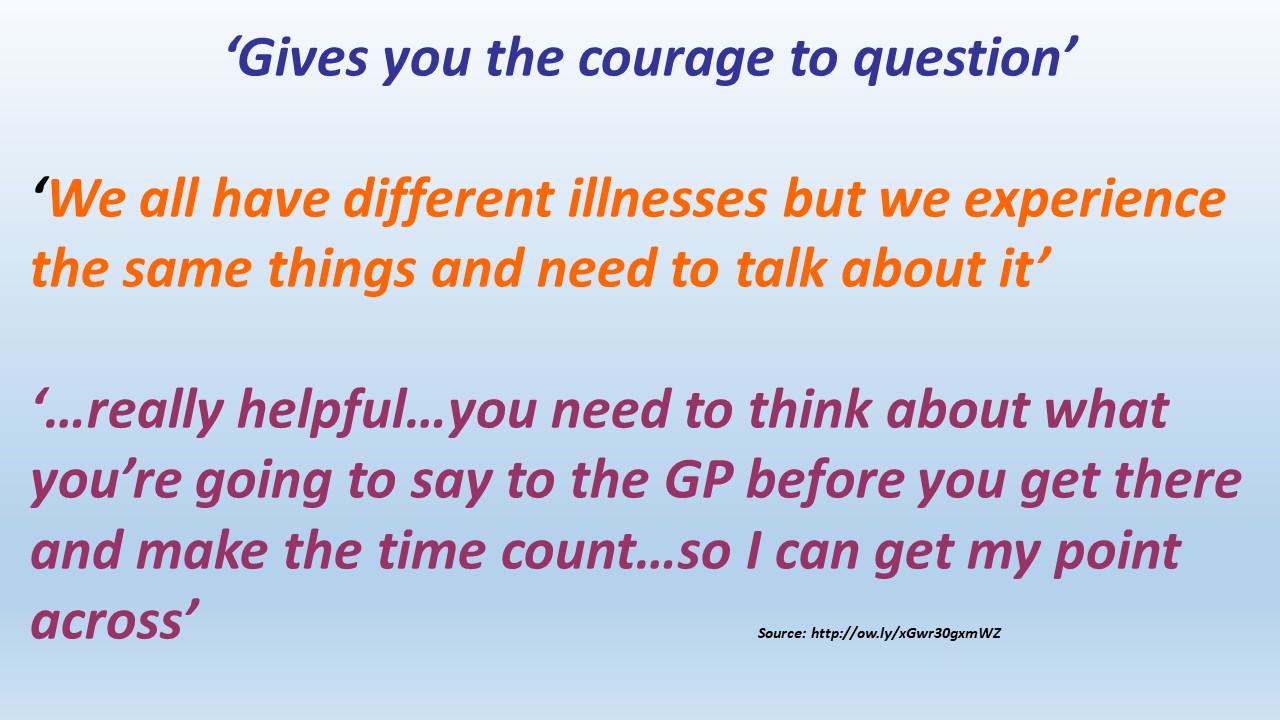
Slide1

Testimonials on our patient led clinical education work.


tseUCsaH.jpg small