In producing a teaching session on evidence based medicine, it occurred to me that there are some important points everyone needs to know, and that they are summarised well in these videos from James McCormack. So, if you like learning through the medium of song and dance, these are for you 😃.
There are some links to important guidelines and academic references too. Some of the comments on learning points reflect my personal views.
Assessing the evidence
‘Viva La Evidence’ from James McCormack
Key learning points:
Look for absolute numbers.To assess clinical studies, you need to have sight of the ‘absolute numbers’ and the figure for Absolute Risk Reduction [ARR]. Sales and marketing people may just tell us about Relative Risk Reduction [RRR]. This figure stays constant with different populations, and always looks better. To be honest I find this concept easy to understand but hard to explain. Here’s a link to an article which goes into more detail.
POOs and DOOs. It’s helpful to look closely at the relevance of the research for patients. Is it focused on outcomes that are patient-oriented [POOs] or disease-oriented outcomes [DOOs]? Click here for a related article.
‘The End of Guidelines’ – how useful are they in real life
‘The end of Guidelines’ – from James McCormack
Key learning point:
Guidelines not tramlines
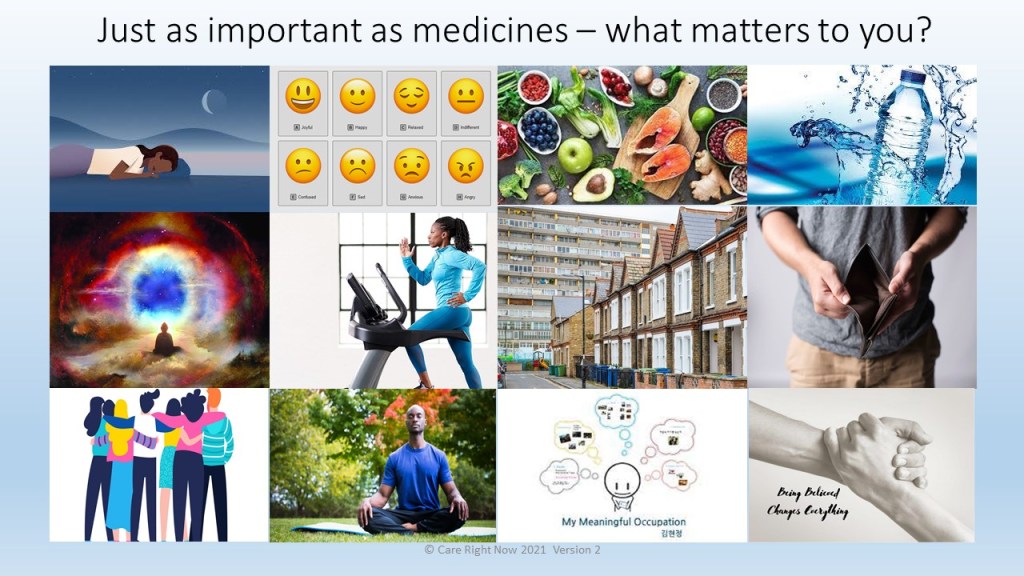
Most current guidelines are written for specific diseases and conditions when, in reality, many people often have more than one long-term condition. In fact, most people with chronic conditions, and most people over 65, have multiple health conditions. This together with other factors such as past experiences, health beliefs, ethnicity, poverty, lifestyle and cultural factors, will influence the choice of medicines.
To help with this there are some important NICE Guidelines, which should be cross-referenced in practice guidance (local and national).
All prescribers should be familiar with and use these guidelines in helping patients choose medicines & treatments. This includes the patient’s choice not to take a medicine, which is specifically noted in the NICE Guideline on Medicines Adherence.
Guidelines are just that – ‘guidelines’ – and not to be followed blindly without question or reference to the individual patient.
The clinician’s role has changed from being the ‘expert’ to that of a teacher, advisor, mentor and sometimes an advocate. At the end of the day, in everyday situations, what we do is our decision. The much-used phrase ‘shared decision making’ is inappropriate in my view, it stems from the old fashioned ‘doctor knows best’ attitude. I prefer to use the phrase patient led decision making.





 Steve Turner's blog site