Uncategorized

Managing long term pain. A NICE Key Therapeutic Topic.

Medicines optimisation in long-term pain.


‘#jargonbuster ‘Medicines Optimisation’ means getting the medicines right for the individual. This may involve an alternative medicine, an alternative treatment or approach, and / or not taking medicines. The person’s experience, beliefs and what matters to them most should drive this decision, with clinicians providing guidance, advice and education on trusted sources of information, the evidence base and on safety’. (Steve Turner)


This is a brief summary relating to a topic in  the 2018 update of Medicines optimisation: key therapeutic topics

To access the pain management topic [KTT21] click here.

The section on medicines optimisation in long term pain contains a huge amount of information, including links to numerous other documents, on an areas critical to patient safety & wellbeing.

Key points:

Opioids

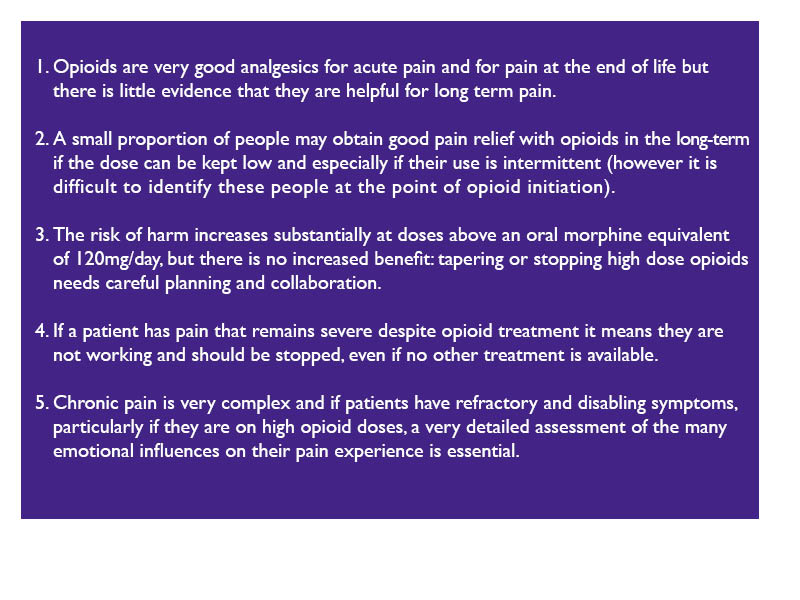
  • There is little evidence that opioids are helpful for long-term pain.
  • Patient safety incidents relating to the unsafe doses of opiates remain a major concern. People develop a ‘tolerance’ to opiate medicines, meaning that higher and higher doses may be needed to deliver the same effect. However this tolerance rapidly goes away when the opiates are stopped, so restarting at the old dose may be fatal.


This image is taken from: ‘Opioids Aware: A resource for patients and healthcare professionals to support prescribing of opioid medicines for pain.

FPM-5-a-day-graphic-2018

Click on the image to enlarge it.

Link: http://www.rcoa.ac.uk/faculty-of-pain-medicine/opioids-aware


‘A review of medicines-related safety incidents involving controlled drugs reported to the NRLS over 7 years found the risk of death with controlled drug incidents was significantly greater than with medication incidents generally (odds ratio 1.48, 95% CI 1.02 to 2.17). Incidents involving overdose of controlled drugs accounted for 89 (70%) of the 128 incidents reporting death or severe harm. Five controlled drugs (morphine, diamorphine, fentanyl, midazolam and oxycodone) were responsible for 113 (88%) of these 128 incidents.’


Non-opioid medicines in long-term pain

  • Patients can be prescribed gabapentin or pregabalin for certain types of pain. Both of these medicines can lead to dependence and may be misused or diverted.

#jargonbuster ‘diverted’ = passed on or sold one to someone else.


Finally, emotional influences are real:

  • When assessing pain with someone it’s vital that clinicians take all aspects of the person’s life into account, including lifestyle, nutrition, hydration, social and housing factors, safeguarding, sleep and rest, other illnesses, emotional influences and their mental health.

And take a full history of medicines being taken, or recently stopped, including over the counter medicines, internet bought medicines, borrowed medicines and illicit substances.


Overall key points to remember on pain management:

  • Adopt a  holistic patient-centered approach

  • Aim to prevent acute pain becoming chronic pain

  • There is little evidence that opioids are helpful for long-term pain


Related Guidance:

NICE Guidance NG5 Medicines Optimisation

NICE Guidance CG76 Medicines adherence: involving patients in decisions about prescribed medicines and supporting adherence

NICE Guidnace CG173 Neuropathic pain in adults: pharmacological management in non-specialist settings

NICE Guidance NG59 Low back pain and sciatica in over 16s: assessment and management

Opioids Aware: A resource for patients and healthcare professionals to support prescribing of opioid medicines for pain

NICE Guideline NG46 Controlled drugs safe use and management

NICE Guidance CG140 Palliative care for adults: strong opioids for pain relief


Steve is a nurse prescriber, Head of Medicines and Prescribing for @MedicineGov , Associate Lecturer at Plymouth University  and NICE Medicines and Prescribing Programme Associate.

mlkU-KY6.jpg large


Author: Steve Turner

First published 1/8/2017. Revised and updated 13/12/2018


Uncategorized

Managing medicines in care homes – four top tips –

Managing medicines in care homes – implementing Quality Standards.

This blog is designed to provide information for care homes and for those choosing a care home.

In a previous blog I looked at the implications of implementing the NICE Guideline on Managing Medicines in Care Homes.

As with all my posts this is a ‘rolling blog’. I welcome feedback and comments. I will take into account all feedback and use the blog to share new learning. If I’ve missed anything or I am wrong on something I will share the learning.

Some tips:

1. Care Homes must have a medicines policy that is regularly reviewed.

It’s worth considering how your policy links to staff training and how user friendly it is. Are procedures outlined clearly in the policy, do they link to competency assessments, and do you use checklists?

For example, we recently helped a care home produce a checklist of the key information needed when contacting a doctor. It is based on the SBAR (situation-background- assessment-recommendation) principle to help focus on the key information. This is proving popular as it saves time on the ‘phone, and the structured approach is popular with GPs. Staff commented that it has saved them hours of chasing, has improved responsiveness & their relationship with local services.

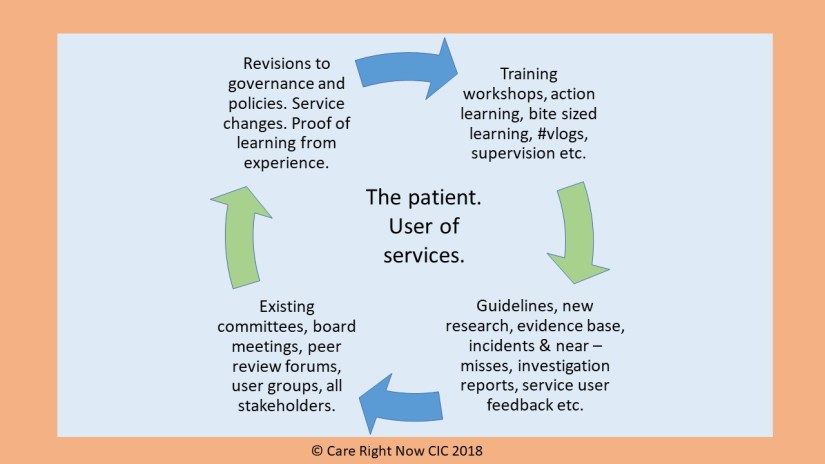
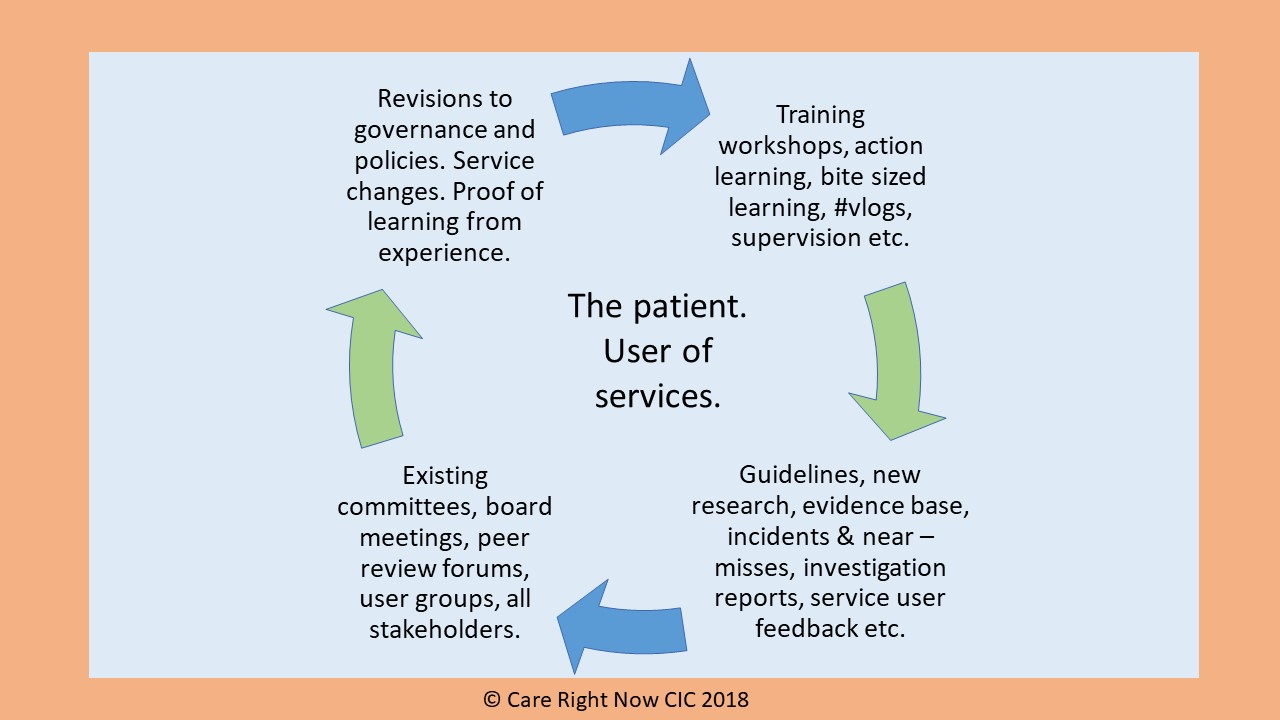
Here’s our method of working. It’s not rocket science and it works. I recommend this approach.

Slide2

2. People must have an accurate listing of their medicines on the day they transfer to the care home.

This is an area where care home staff are dependent on others. Hours can be spent trying to sort out problems. My advice here is for managers to ensure that discrepancies are always reported back to the source (in writing) and ask for feedback on how they are followed up. Additionally, it’s helpful to record your satisfaction with good quality and complete discharge information.

Our experience is that electronic systems can greatly improve quality of this information.

An NHS Patient Safety Alert highlights the importance of communication of discharge information.

3. People who live in care homes should have at least 1 multidisciplinary medication review per year.

There is considerable variation in practice around medicines reviews, with increasing help available from Clinical Commissioning Group Medicines Management Teams and Specialist Clinicians in most areas.

Although this is an area largely outside the control of care homes there are 3 things which can help.

  • Firstly, by consistently referring back any prescriptions which don’t have complete and unambiguous directions.
  • Secondly, by ensuring that there is an easily accessible record of what each medicine is being prescribed for, (regular medicines, one-off prescriptions and as required medicines). I am still amazed that this isn’t always the case.
  • And thirdly, whilst staff residents / relatives are not expected to be experts on medicines, access to basic information on each medicine, including on side-effects and interactions should be readily available.

4. Ensure you have safe systems for administering and recording medicines.

It is vital that you have a reliable and auditable system of MAR [medicine administration record] charts in place and that the process of administration of medicines to residents is safe.

Two main points spring to mind:

4.1. Monitored dose systmes [MDS] vs original pack dispensing [OPD].

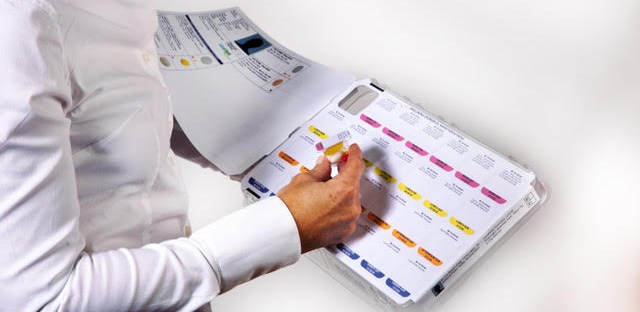
There has been a recent move by some Pharmacies & local NHS teams to change residential homes from Monitored Dose Systems [MDS] (also called blister packs) back to Original Pack Dispensing [OPD] (sometimes referred to as ‘patient pack dispensing’). The reason for this is often given as to improve safety. It is sometimes implied that guidelines are driving this move back to original pack dispensing, even that OPD can help prevent polypharmacy & reduce medicines waste. All these statements are misleading.

Interestingly, the cost to the Pharmacy of putting the medicines in MDS blister packs is not mentioned in their promotions original pack dispensing [OPD].

I have not been able to find any evidence that original pack dispensing is safer than monitored dose systems. Additionally, the related NICE guidelines, quality standards and the CQC report ‘Medicines in Health and Social Care’ do not state this.

What’s important is that the home uses the safest system of delivering medicines to the residents, considering the patients’ wishes, the home’s skill mix, staff competencies, workload, and capacity. This is particularly important as staff tell me the original pack dispensing takes ‘twice as long’.

I am also aware of problems with OPD, for example: ‘Care home receives a box of meds. The medication is checked in and the resident has 2 MAR entries for same drug. Diligent staff member (calls the system provider and) prevents patient harm.In this example the boxed medicine had the wrong start date, which led to duplication on the MAR chart. In a blister the dispenser would have noticed the start date error on one item and made the data entry correction prior to the box medicine reaching the patient’s bedside.

My advice on the subject of MDS vs OPD is that if you are being lobbied to change to original pack dispensing, here are some key questions to consider:

A. Bearing in mind that OPD could take twice as long, what are the advantages of moving to this? Can you be sure, for example, that unsafe practices such as ‘potting up’ will not creep into use? Will it improve patient safety & compliance with NICE Guidelines and quality standards?

B. Ask for evidence of the benefits of OPD as opposed to MDS.

C. Ask for evidence to back up the claim that OPD will help reduce polypharmacy? (In my view this is a bizarre claim).

D. Ask for evidence to back up the claim that OPD will reduce medicines waste.

E. Ask the residents or their families, or (if there’s a Lasting Power of Attorney [LPA] or Court of Protection order in place), ask the Attorneys or Deputys.

F. Ask the staff.

G. Ask the prescribers.

I’m interested in feedback on this. I am a nurse by trade and used to be a proponent of OPD in all circumstances. Since working in social care and with residential homes I’ve re-visited this view.

Care home residents need well designed systems. Unless the patient can manage their medicines themselves (always the first consideration), a good MDS system is often a safer way to administer medicines.

4.2 . The benefits of using electronic MAR charts.

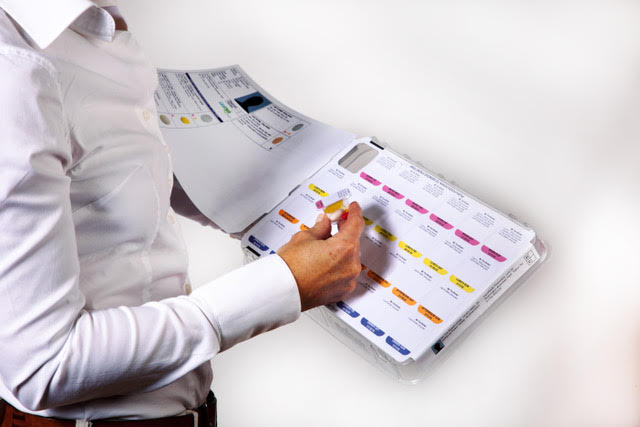
blister pack 3

These fall into three categories.

  1. Improved legibility.
  2. Improved access (e.g., if the charts are accessed and updated on a computer or portable device there is less risk of losing, damaging, or mislaying them).
  3. eMAR chart systems that obtain the data taken directly from the Community Pharmacy system eliminate the need for transcribing, which is a high-risk area.

In addition to the three benefits mentioned, carefully planned, and implemented eMAR systems contribute to a decrease in medicines errors, reduced administrative costs and improved quality of care.

Click here to read more about eMAR systems.

tseUCsaH.jpg small
Steve Turner

Last updated: 06.10.2024


Useful links:

NICE Guideline Managing Medicines in Care Homes

NICE Quality Standard Managing Medicines in Care Homes

CQC Managing Medicines in Health and Adult Social Care


blister-pack-3.jpg
Accountability, clinical education, Clinical Governance, health, healthcare, medicines, nhs, patients

Using technology in care homes to improve safety- Electronic medicines administration systems – eMAR –

Introduction

Medicines errors in care homes are unacceptably high. A key study found that residents taking seven or more medicines had a 79% chance of being victim of a medicines error (Alldred et all 2009). This led to several follow-up studies and actions to improve medicines management in care homes, including a move to implement electronic medicines administration [eMAR] systems. A recent study explored medication-related incidents and their causes in UK care homes. This review emphasised the need for improved medication management processes to reduce errors and enhance patient safety (Irons et al 2022).

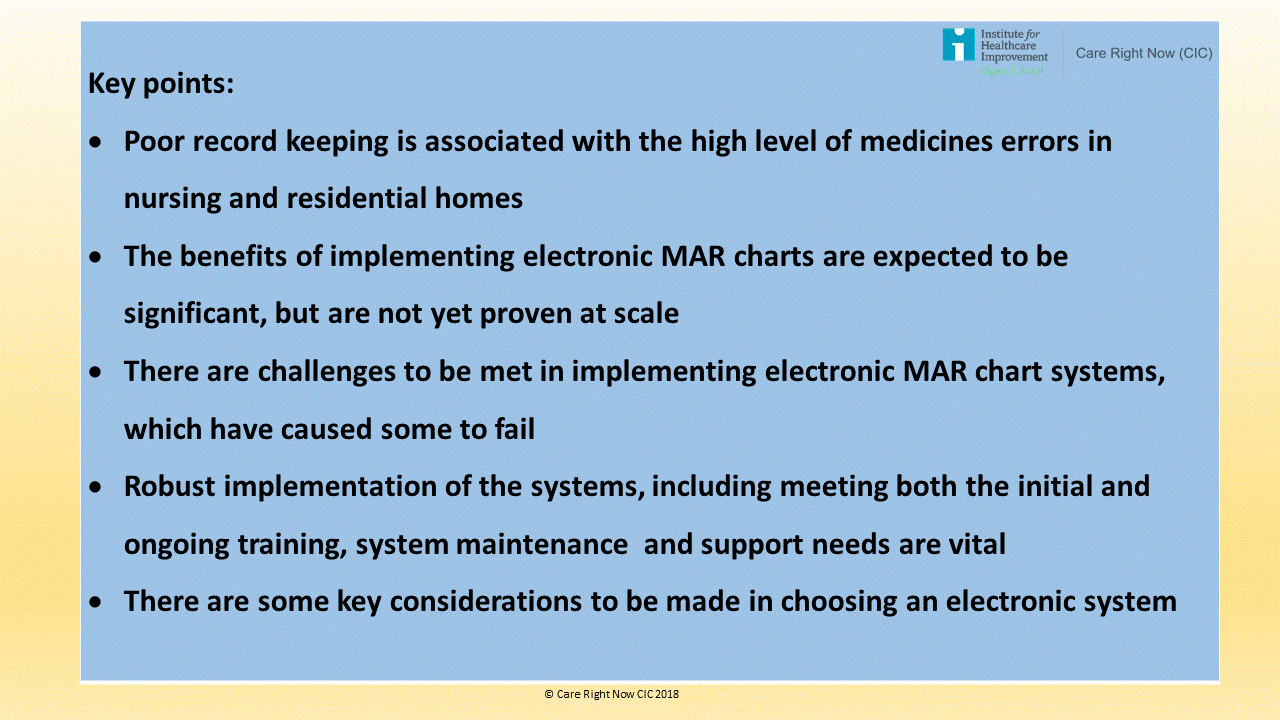
Slide1

Best practice in medicines record keeping

The management of medicines in nursing and residential homes is part of a highly complex pathway.  It involves multiple staff groups and organisations.

These include the G.P.; all who prescribe medicines and treatments; Care Staff of all grades; Support Workers; Consultants; Specialist Practitioners; and Pharmacists.

Benefits of electronic MAR charts

The benefits of implementing electronic MAR charts fall into three categories.

  1. Improved legibility.
  2. Improved access (e.g., if the charts are accessed and updated on a computer or portable device there is less risk of losing, damaging, or mislaying them).
  3. eMAR chart systems that obtain the data taken directly from the Community Pharmacy system eliminate the need for transcribing.

Systemitic reviews indicate that carefully planned and implemented eMAR systems contribute to a decrease in medicines errors, reduced administrative costs and improved quality of care (Gates et al 2021).

Challenges of implementing electronic MAR charts

There are three ‘bottom line’ challenges to manage when transitioning to electronic MAR charts.

1. Assessing potential eMAR systems. This is critical, as poorly designed systems will not deliver benefits, and eventually fail. The system must be easy to use and free of unnecessary jargon, using only approved acronyms or mnemonics. Electronic systems also offer the opportunity to introduce features which enhance safety, some of which, such as time ordered charts, are difficult to include in a paper-based syste

Here’s a some key features to look for:

  • Photo identification
  • Time ordered charts
  • Body maps
  • Drug images
  • Start and finish dates
  • Insulin charts
  • Warfarin charts
  • As required – prn- charts
  • Does the system record the reason prn medicines were given?
  • Medication history
  • Medication profiles
  • How the system records allergies and sensitivities
  • What alerts and warning messages are included?
  • How the system copes with medicines dispensed directly from hospitals
  • How does the system cater with titration of medicines and variable doses
  • How does the system cater with weekly medicines (e.g. alendronic acid)?
  • Use of monitoring information (e.g. INR for warfarin administration, lithium level recording, BMI, B/P, pulse etc.)
  • That the system uses up to date approved terminology
  • Does the system records medicines not given or partially administered, with a reason?
  • How the system can be used to order and control stocks of medicines
  • How easy is it to produce reports from the system?

2. Data Security and Protection. It is vital that the system handles patient consent; patient confidentiality, system access; ownership of patient identifiable data; storage and transfer of data in a way which is compliant with the laws and regulations of your part of the U.K.

All organisations and systems that access to NHS patient data must successfully complete the NHS data security and protection toolkit [DSPT]. This toolkit provides assurance that the system suppliers are handling data safely and that personal information is handled correctly. You can search the supplier’s NHS DSPT registration here: https://www.dsptoolkit.nhs.uk/OrganisationSearch

3. Process Reviews. It is important to look at your current processes and how the new system will work. For example, there have been problems where urgent acute prescriptions were supplied by a different pharmacy from the pharmacy linked to the home’s eMAR system. The eMAR system must be able to cope with all aspects of prescribing from multiple sources and prevent information having to be duplicated.


Training and support requirements

Quality training and support, both during the implementation and on an ongoing basis, underpin all successful healthcare I.T systems. There are four areas which are sometimes overlooked that deserve special mention:

1.  Many of the users of eMAR systems will be Healthcare Assistants or other non-registered skilled staff. As a result, it will be important that the training they receive reinforces their duty to keep accurate records, that they know where to go for help and advice and their role and responsibilities are made clear.

2. A substantial number of staff may speak English as a second language. Therefore, it is important that eMAR systems do not use any unnecessary jargon, and that any help text is in plain language.

3. Appropriate knowledge of Data Protection (GDPR) and Information Governance rules and regulations is essential and should be built into any training programmes.

Overall, consideration needs to be given to the nature and content of the training needed to implement the system, including how this is linked to the policies and procedures and overall governance of the home.

Good suppliers will be able to give advice and support on this.


Conclusion

Record keeping in medicines management is a critical safety area for care homes. The current high level of medicines errors is in care homes affects half a million people in England.

The prospect of implementing electronic systems for recording medicines administration holds great potential but is not itself without risk. It needs to be approached carefully in the light of the complex arrangements and multiple organisations involved in prescribing, supplying, administering, dispensing and monitoring medicines for your residents.

Given the considerations over choice and implementation of systems, eMAR can overcome problems of legibility, transcribing, and access to records and information in a way which is not possible with paper systems.

In years to come it is likely that, just as most G.P.’s would not want to return to paper systems, care homes will come to see electronic systems in the same way. The main beneficiary of this will be the residents in terms of improved safety.


References:

  • Alldred P, Barber N, Buckle P et al (2009) Care home use of medicines study (CHUMS): Medication errors in nursing and residential care homes – prevalence, consequences, causes and solutions. Report to the Patient Safety Research Portfolio. Department of Health, London.
  • Peter J Gates, Rae-Anne Hardie, Magdalena Z Raban, Ling Li, Johanna I Westbrook, How effective are electronic medication systems in reducing medication error rates and associated harm among hospital inpatients? A systematic review and meta-analysis, Journal of the American Medical Informatics Association, Volume 28, Issue 1, January 2021, Pages 167–176, https://doi.org/10.1093/jamia/ocaa230
  • Irons, M. W., Auta, A., Portlock, J. C., & Manfrin, A. (2022). Medication errors and processes to reduce them in care homes in the United Kingdom: a scoping review. Home Health Care Services Quarterly41(2), 91–123. https://doi.org/10.1080/01621424.2021.2007196


Author: Steve Turner RGN, RMN, Ba (Hons), PG Dip Ed – an experienced nurse educator, who has worked in strategic consultancy and on change projects across healthcare in the UK.

Blog last Updated: 05.07.2025

Uncategorized

Managing Medicines in Care Homes. Implementing NICE Guidance and Quality Standards.

meds-home-test

Managing Medicines in Care Homes. Communication and sharing medicines information. Implementing NICE Guidance and Quality Standards.

Summary:
Steve Turner reflects on the communication challenges facing nursing and residential homes around implementing NICE Guidelines and Quality Standards and offers some practical advice.

Introduction:
Quality Standards on managing medicines in care homes from the National Institute for Health and Care Clinical Excellence in England (NICE) link to the NICE Guidance on Managing Medicines in Care Homes, which contains 118 recommendations.

This blog post offers suggestions on how to go about achieving quality standards, focusing specifically on communication and timely sharing of accurate medicines information.

The findings are based on experiences of related quality improvement [QI] projects.

By working closely with front line staff in care homes, we have been able to identify and pilot some key changes. Then spread the learning.

As part of this approach, we have produced an alternative checklist on managing medicine in care homes.
Managing medicines checklist:

Slide1

By focusing on these questions at the outset, issues around best practice in medicines management can be identified.

These questions are particularly important due to the large number of people involved in the care of residents, which includes their G.P.; Specialist Nurses; Visiting Health Professionals; Pharmacists, Therapists, Hospitals and Outpatient Consultants.

Good quality management of medicines relies on all parties sharing information in a timely and auditable way. Much of this is outside the direct control of the care home.

Here’s two real life examples of things care homes can do to improve communication and promote best practice.

Example 1 – Knowledge of medicines and what are they being given for?

There are two principal areas to consider here.

Knowledge of medicines:

Firstly, how much detail should staff know about the medicines residents are taking?

There are many medicines which need to be given in a specific way, e.g. with food, before food, after food, dependent on the pulse rate etc.

Often more specific instructions apply, such as for alendronic acid, which is usually given for osteoporosis. These tablets must be swallowed whole and the person taking the medicine must remain upright for a period of time afterwards. This is because the tablet is acidic and will damage the stomach wall if it doesn’t pass through it quickly. So, if a resident is unable to take the tablet as directed, and therefore isn’t letting it pass through the stomach quickly, advice from a clinician as is needed straight away.

Another example of something where a basic knowledge of the medicine is needed is with the SSRI group of antidepressants (e.g., citalopram). Although these drugs aren’t addictive, they are medicines which need to be taken consistently and, if stopped abruptly (not tailed off), will often cause ‘discontinuation’ symptoms. These symptoms may include giddiness and very distressing feelings such as electric shock type sensations. If the resident is not able to express themselves easily their distress could be misinterpreted when they start to refuse to take it, or the supply has run out.

Information on each medicine is not always easily available. An answer to this is to ensure basic information leaflets on the medicines taken by residents are readily available to staff relatives and (wherever appropriate) to the resident, either in print, or online. A useful source of clearly written short medicines information leaflets is available at http://www.patient.co.uk .

Your local Pharmacy or Medicines Management Team, Specialist Nurses or G.P. will be able to give advice on the most appropriate patient information sheets, many of which are also available in easy read format and in other languages.

What are the medicines being given for?

Secondly, when giving out medicines, do staff, residents and relatives know what each medicine is being given for? NICE Guidance specifies that information on medicines and their indication (what they are being given for) should be readily available to all those involved in the management of medicines. In practice this isn’t an item which appears on most Medicines Administration Records (MAR charts). Neither is it always shown on the pharmacy label, which only lists exactly what the doctor has written on the prescription.

Why is this important? These differences can be significant, and lead to serious mistakes, if this information is missing.

Firstly, for completeness and safe care I believe it’s unacceptable not to have this information readily to hand. All patients (and / or those caring for them, and acting on their behalf), whether this is in a care home or the person’s home, should be given this information, in order that the person (or their representative) can be part of a shared decision-making process on the choice of medicines.

Secondly, visiting professionals and clinicians, out-of–hours and emergency services need to know this information to be able to assess and treat the residents safely. Many medicines can be given for different conditions often with a different dose range.

An example is amitriptyline which, if you look it up, is an anti-depressant; however, it is also given in lower doses for neuropathic pain, and sometimes used for irritable bowel syndrome.

Another example is lithium which is frequently prescribed as a mood stabiliser, it can also be prescribed, in particular circumstances, to enhance the effect of anti-depressants. Unless the reason for the prescription is known and easy to find things can go wrong. I have known clinicians to stop lithium inappropriately because the records were incomplete.

When working as a Community Mental Health Nurse I once visited someone who had attempted suicide, who explained that she was driven to it because she was taking an antidepressant and it ‘wasn’t working’. In fact, she had been prescribed amitriptyline for pain at a low dose, much lower than would be effective for depression.

In the longer term shared electronic medicines records are the most appropriate and robust solution. Prior to this, there are several things which will make the relevant information more readily available to all who need it.

At the risk of telling Granny how to suck eggs, here’s a checklist of interventions we are piloting as part of quality improvement projects:

1. Always query incomplete directions on medicines, either with the Pharmacy or the G.P.

2. When medicines are reviewed ask specifically for information on what they have been prescribed for, and record this.

3. Fax (or preferably email) medicines queries to G.P. Surgeries in order to keep a record of them. (This also means that people are not interrupted by ‘phone calls, don’t have to pass a verbal message on, and can consider the reply more fully.)

Example 2 – Records of communication between different services and professionals

Residents medicines are often managed by several professionals, for example the G.P. may prescribe based on information from a Psychiatrist, Specialist Nurse, Physiotherapist, Speech Therapist, Dietician, or Non-medical Prescribers may change, stop or add medicines themselves when they visit the home.

Residents may also be prescribed a variable dose drug such as warfarin, where the dose is monitored and prescribed by a separate service. Some residents may also be seeing private clinicians, or receiving alternative therapies which need to be known to other prescribers.

Diets and dietary supplements too must be communicated to all prescribers, and this may have a significant effect on the absorption of medicines. The same is true for the resident’s posture, mobility, and state of hydration, so all clinicians need to be aware of problems in these areas.

Complex information about medicines is frequently recorded is a variety of places, and these records are not always complete, particularly when something changes outside of the standard review cycle.

We’ve been looking at this more closely with staff in homes as part of an action learning process, and came up with the following recommendations:

1. If discharge information on medicines is incomplete raise this with the hospital concerned in writing, and (especially if this happens repeatedly) and ask for information on what will be done to correct this problem in the long term. This need is reinforced by a patient safety alert issued by NHS England on ‘timeliness of communication with primary and social care when patients are discharged from hospital’.

2. When visiting professionals carry out an assessment and ask care home staff to contact the resident’s G.P., ask them to put this in writing. This avoids the possibility of mixed messages and enables a written record to be kept without duplication of effort.

3. When G.P.s visit the home to carry out reviews, prepare a structured written list of residents needing attention in advance of the visit.

Conclusion

Implementing Guidance and Quality Standards on medicines management in care homes can seem like a daunting task. By working closely with staff in the homes and starting out with some broad questions, things which need to be changed can be identified and worked through in a systematic way.

Many of the difficulties around communication lie outside the direct control of the care home, as a result communication and information sharing need to be looked at jointly.

Residents benefit from the homes taking a lead in insisting on full medicines information from prescribers, to ensure safety. This involves remaining steadfastly assertive in pointing out when information is incomplete.

  • Key areas to focus on around communication are:
    • Does everyone (residents, staff, representatives, and relatives) know what each medicine is being given for?
    • How are changes to medicines (i.e. starting, stopping, dose alterations and requests for reviews) communicated?

tseUCsaH.jpg small

Version 3 . Updated: 21.03.2022